
Anti-Human CD160 Reference Antibody (MAT 302)
- Catalog number: BS11016
- Availability: In Stock
$370.00
- Ex Tax: $370.00
Description: Anti-Human CD160 (MAT 302) (BS11016) is a research-grade recombinant antibody targeting CD160. Produced in mammalian cells with native-like glycosylation.
Highlights:
• Research Grade — For PK/PD studies, assay development, and ADA research.
• Native Glycosylation — Mammalian expression ensures native-like patterns.
Host species: Human
Isotype: IgG
Species reactivity: Human
Immunogen:
Form: Liquid
Storage instructions:
Storage buffer: 0.01M PBS, pH7.4.
Concentration: 1mg/ml
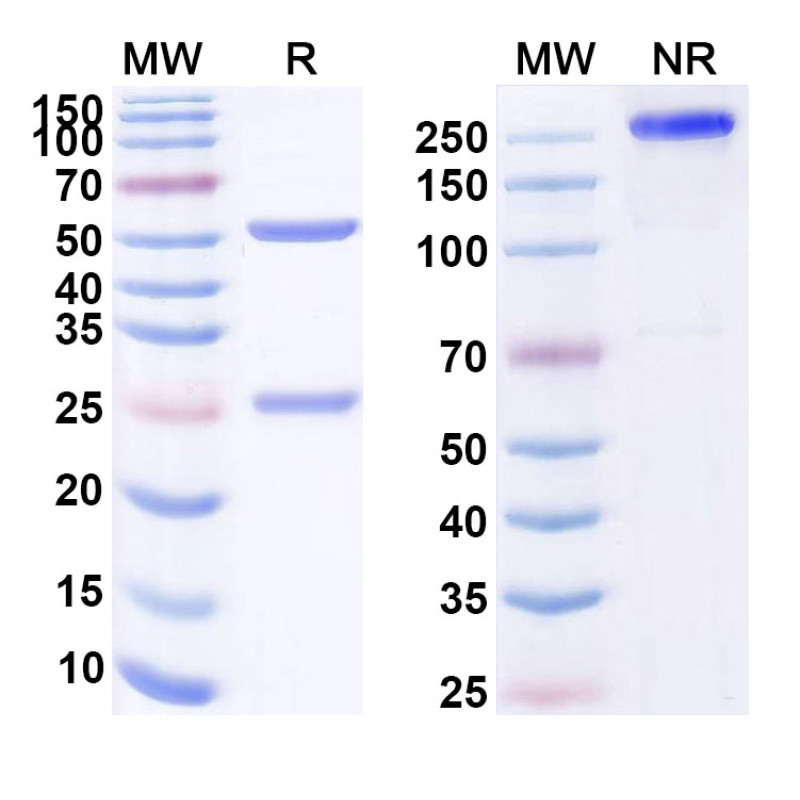
Purity: >95% as determined by SDS-PAGE.
Clonality: Monoclonal
Applications: Research Grade Biosimilar
Target: NaturalkillercellreceptorBY55,CD160antigen,CD160,BY55
Purification: Protein A/G purified from cell culture supernatant.
Endotoxin level: <1EU/mg, determined by LAL gel clotting assay
Expression system: Mammalian Cells
Stability and Storage: Use a manual defrost freezer and avoid repeated freeze-thaw cycles. Store at 4°C short term (1-2 weeks). Store at -20°C 12 months. Store at -80°C long term.
Alternative Names: MAT-302,MAT302,MAT302
Background: CD160 antigen is a ~19 kDa protein. Receptor on immune cells capable to deliver stimulatory or inhibitory signals that regulate cell activation and differentiation. Exists as a GPI-anchored and as a transmembrane form, each likely initiating distinct signaling pathways via phosphoinositol 3-kinase in activated NK cells and via LCK and CD247/CD3 zeta chain in activated T cells. Receptor for both classical and non-classical MHC class I molecules. In the context of acute viral infection, recognizes HLA-C and triggers NK cell cytotoxic activity, likely playing a role in anti-viral innate immune response. On CD8+ T cells, binds HLA-A2-B2M in complex with a viral peptide and provides a costimulatory signal to activated/memory T cells.
References:
1. Nikolova, M. et al. (2002) International immunology 14, 445-51. PMID: 11978774
2. Rabot, M. et al. (2007) International immunology 19, 401-9. PMID: 17307798
3. Giustiniani, J. et al. (2009) Journal of immunology (Baltimore, Md. : 1950) 182, 63-71. PMID: 19109136
4. Le Bouteiller, P. et al. (2002) Proceedings of the National Academy of Sciences of the United States of America 99, 16963-8. PMID: 12486241
5. Agrawal, S. et al. (1999) Journal of immunology (Baltimore, Md. : 1950) 162, 1223-6. PMID: 9973372
6. Viganò, S. et al. (2014) PLoS pathogens 10, e1004380. PMID: 25255144
7. Fons, P. et al. (2006) Blood 108, 2608-15. PMID: 1680962
8. Cai, G. et al. (2008) Nature immunology 9, 176-85. PMID: 18193050
Note: For research use only. Not suitable for clinical or therapeutic use.
Highlights:
• Research Grade — For PK/PD studies, assay development, and ADA research.
• Native Glycosylation — Mammalian expression ensures native-like patterns.
Host species: Human
Isotype: IgG
Species reactivity: Human
Immunogen:
Form: Liquid
Storage instructions:
Storage buffer: 0.01M PBS, pH7.4.
Concentration: 1mg/ml
Purity: >95% as determined by SDS-PAGE.
Clonality: Monoclonal
Applications: Research Grade Biosimilar
Target: NaturalkillercellreceptorBY55,CD160antigen,CD160,BY55
Purification: Protein A/G purified from cell culture supernatant.
Endotoxin level: <1EU/mg, determined by LAL gel clotting assay
Expression system: Mammalian Cells
Stability and Storage: Use a manual defrost freezer and avoid repeated freeze-thaw cycles. Store at 4°C short term (1-2 weeks). Store at -20°C 12 months. Store at -80°C long term.
Alternative Names: MAT-302,MAT302,MAT302
Background: CD160 antigen is a ~19 kDa protein. Receptor on immune cells capable to deliver stimulatory or inhibitory signals that regulate cell activation and differentiation. Exists as a GPI-anchored and as a transmembrane form, each likely initiating distinct signaling pathways via phosphoinositol 3-kinase in activated NK cells and via LCK and CD247/CD3 zeta chain in activated T cells. Receptor for both classical and non-classical MHC class I molecules. In the context of acute viral infection, recognizes HLA-C and triggers NK cell cytotoxic activity, likely playing a role in anti-viral innate immune response. On CD8+ T cells, binds HLA-A2-B2M in complex with a viral peptide and provides a costimulatory signal to activated/memory T cells.
References:
1. Nikolova, M. et al. (2002) International immunology 14, 445-51. PMID: 11978774
2. Rabot, M. et al. (2007) International immunology 19, 401-9. PMID: 17307798
3. Giustiniani, J. et al. (2009) Journal of immunology (Baltimore, Md. : 1950) 182, 63-71. PMID: 19109136
4. Le Bouteiller, P. et al. (2002) Proceedings of the National Academy of Sciences of the United States of America 99, 16963-8. PMID: 12486241
5. Agrawal, S. et al. (1999) Journal of immunology (Baltimore, Md. : 1950) 162, 1223-6. PMID: 9973372
6. Viganò, S. et al. (2014) PLoS pathogens 10, e1004380. PMID: 25255144
7. Fons, P. et al. (2006) Blood 108, 2608-15. PMID: 1680962
8. Cai, G. et al. (2008) Nature immunology 9, 176-85. PMID: 18193050
Note: For research use only. Not suitable for clinical or therapeutic use.
Images
-
 SDS-PAGE
SDS-PAGE for Research Grade Anti-Human CD160 (MAT 302)