

Anti-Human CCL2/JE/MCP-1 Reference Antibody (Carlumab, RUO)
- Catalog number: BS10059
- Availability: In Stock
$370.00
- Ex Tax: $370.00
Description: Research Grade Carlumab (BS10059) is a human monoclonal antibody detecting HC11 in ELISA, Bioactivity: FACS, Functional assay, Research in vivo. Suitable for Human.
Highlights:
• Multi-Application — Validated across multiple applications.
Host species: Human
Isotype: IgG1-kappa
Species reactivity: Human
Immunogen:
Form: Liquid
Storage instructions:
Storage buffer: 0.01M PBS, pH7.4.
Concentration: 2.08mg/ml
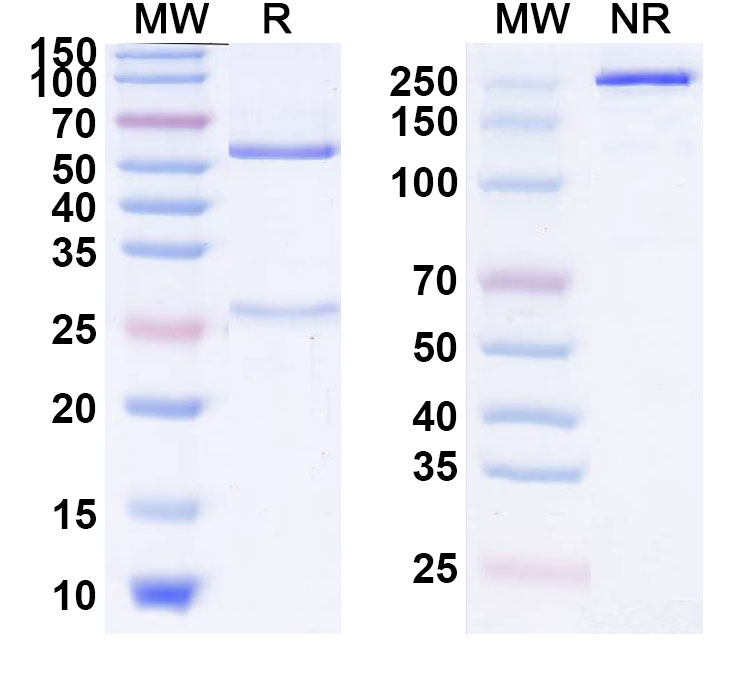
Purity: >95% as determined by SDS-PAGE.
Clonality: Monoclonal
Applications: Research Grade Biosimilar
Target: HC11,MCP-1,MCP1,Monocytechemotacticprotein1,Monocytechemotacticandactivatingfactor,Small-induciblecytokineA2,SCYA2,MCAF,MonocytesecretoryproteinJE,C-Cmotifchemokine2,Monocytechemoattractantprotein1,CCL2
Purification: Protein A/G purified from cell culture supernatant.
Endotoxin level: <1EU/mg, determined by LAL gel clotting assay
Expression system: Mammalian Cells
Stability and Storage: Use a manual defrost freezer and avoid repeated freeze-thaw cycles. Store at 4°C short term (1-2 weeks). Store at -20°C 12 months. Store at -80°C long term.
Alternative Names: CNTO888,CAS:915404-94-3
Background: C-C motif chemokine 2 (HC11,MCP-1,MCP1,Monocyte chemotactic protein 1,Monocyte chemotactic and activating factor,Small-inducible cytokine A2,SCYA2,MCAF,Monocyte secretory protein JE,C-C motif chemokine 2,Monocyte chemoattractant protein 1,CCL2) is a ~11 kDa protein. Acts as a ligand for C-C chemokine receptor CCR2. Signals through binding and activation of CCR2 and induces a strong chemotactic response and mobilization of intracellular calcium ions. Exhibits a chemotactic activity for monocytes and basophils but not neutrophils or eosinophils. May be involved in the recruitment of monocytes into the arterial wall during the disease process of atherosclerosis.
References:
1. Hemmerich, S. et al. (1999) Biochemistry 38, 13013-25. PMID: 10529171
2. Jarnagin, K. et al. (1999) Biochemistry 38, 16167-77. PMID: 10587439
3. Paavola, CD. et al. (1998) The Journal of biological chemistry 273, 33157-65. PMID: 9837883
4. Zhang, YJ. et al. (1994) The Journal of biological chemistry 269, 15918-24. PMID: 8195247
5. Weber, M. et al. (1996) The Journal of experimental medicine 183, 681-5. PMID: 8627182
6. Chakravarty, L. et al. (1998) The Journal of biological chemistry 273, 29641-7. PMID: 9792674
7. Li, YS. et al. (1993) Molecular and cellular biochemistry 126, 61-8. PMID: 8107690
Note: For research use only. Not suitable for clinical or therapeutic use.
Highlights:
• Multi-Application — Validated across multiple applications.
Host species: Human
Isotype: IgG1-kappa
Species reactivity: Human
Immunogen:
Form: Liquid
Storage instructions:
Storage buffer: 0.01M PBS, pH7.4.
Concentration: 2.08mg/ml
Purity: >95% as determined by SDS-PAGE.
Clonality: Monoclonal
Applications: Research Grade Biosimilar
Target: HC11,MCP-1,MCP1,Monocytechemotacticprotein1,Monocytechemotacticandactivatingfactor,Small-induciblecytokineA2,SCYA2,MCAF,MonocytesecretoryproteinJE,C-Cmotifchemokine2,Monocytechemoattractantprotein1,CCL2
Purification: Protein A/G purified from cell culture supernatant.
Endotoxin level: <1EU/mg, determined by LAL gel clotting assay
Expression system: Mammalian Cells
Stability and Storage: Use a manual defrost freezer and avoid repeated freeze-thaw cycles. Store at 4°C short term (1-2 weeks). Store at -20°C 12 months. Store at -80°C long term.
Alternative Names: CNTO888,CAS:915404-94-3
Background: C-C motif chemokine 2 (HC11,MCP-1,MCP1,Monocyte chemotactic protein 1,Monocyte chemotactic and activating factor,Small-inducible cytokine A2,SCYA2,MCAF,Monocyte secretory protein JE,C-C motif chemokine 2,Monocyte chemoattractant protein 1,CCL2) is a ~11 kDa protein. Acts as a ligand for C-C chemokine receptor CCR2. Signals through binding and activation of CCR2 and induces a strong chemotactic response and mobilization of intracellular calcium ions. Exhibits a chemotactic activity for monocytes and basophils but not neutrophils or eosinophils. May be involved in the recruitment of monocytes into the arterial wall during the disease process of atherosclerosis.
References:
1. Hemmerich, S. et al. (1999) Biochemistry 38, 13013-25. PMID: 10529171
2. Jarnagin, K. et al. (1999) Biochemistry 38, 16167-77. PMID: 10587439
3. Paavola, CD. et al. (1998) The Journal of biological chemistry 273, 33157-65. PMID: 9837883
4. Zhang, YJ. et al. (1994) The Journal of biological chemistry 269, 15918-24. PMID: 8195247
5. Weber, M. et al. (1996) The Journal of experimental medicine 183, 681-5. PMID: 8627182
6. Chakravarty, L. et al. (1998) The Journal of biological chemistry 273, 29641-7. PMID: 9792674
7. Li, YS. et al. (1993) Molecular and cellular biochemistry 126, 61-8. PMID: 8107690
Note: For research use only. Not suitable for clinical or therapeutic use.
Images
-
 Bioactivity
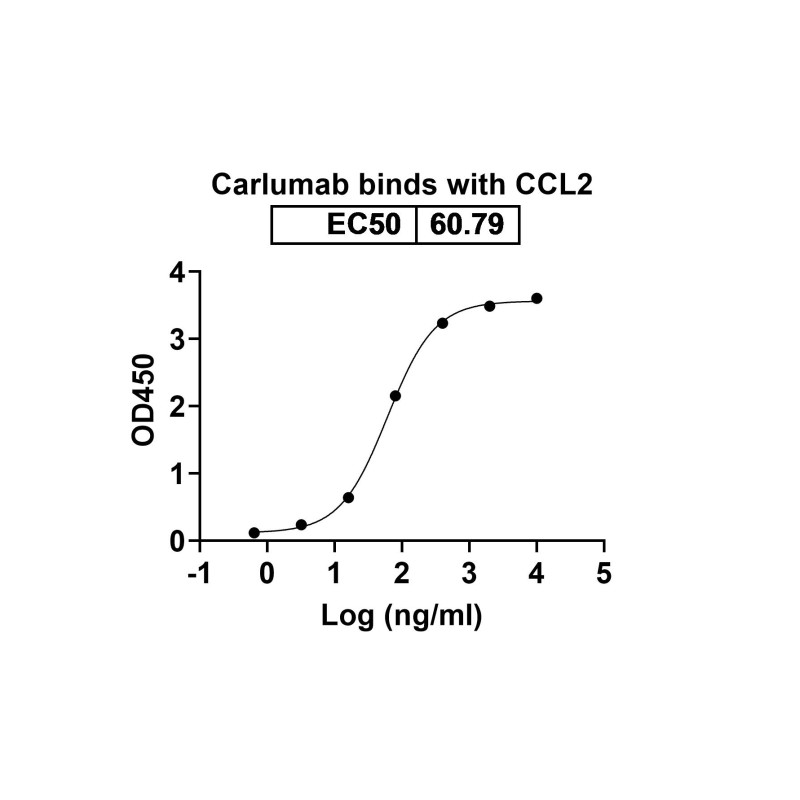
Detects CCL2/MCP-1 in indirect ELISAs.
-
 SDS-PAGE
SDS-PAGE for Research Grade Carlumab.