
Anti-PRKCG Polyclonal Antibody
- Catalog number: PA12122
- Availability: In Stock
$168.00
- Ex Tax: $168.00
- Host species: Rabbit
- Species reactivity: Human, Mouse, Rat
- Immunogen: E. coli - derived recombinant Human PRKCG (His31-Arg316).
- Form: Liquid
- Storage buffer: 0.01M PBS, pH 7.4, 50% Glycerol, 0.05% Proclin 300.
- Clonality: Polyclonal
- Isotype: IgG
- Applications: ELISA, IHC, WB
- Target: Protein kinase C gamma type, PRKCG, PKCG, PKC-gamma
- Purification: Purified by antigen affinity column.
- Stability and Storage: Use a manual defrost freezer and avoid repeated freeze thaw cycles. Store at 2 to 8°C for frequent use. Store at -20 to -80°C for twelve months from the date of receipt.
- Background: Protein kinase C gamma type (PRKCG) is a ~78 kDa protein. Calcium-activated, phospholipid- and diacylglycerol (DAG)-dependent serine/threonine-protein kinase that plays diverse roles in neuronal cells and eye tissues, such as regulation of the neuronal receptors GRIA4/GLUR4 and GRIN1/NMDAR1, modulation of receptors and neuronal functions related to sensitivity to opiates, pain and alcohol, mediation of synaptic function and cell survival after ischemia, and inhibition of gap junction activity after oxidative stress. Binds and phosphorylates GRIA4/GLUR4 glutamate receptor and regulates its function by increasing plasma membrane-associated GRIA4 expression. In primary cerebellar neurons treated with the agonist 3,5-dihyidroxyphenylglycine, functions downstream of the metabotropic glutamate receptor GRM5/MGLUR5 and phosphorylates GRIN1/NMDAR1 receptor which plays a key role in synaptic plasticity, synaptogenesis, excitotoxicity, memory acquisition and learning. May be involved in the regulation of hippocampal long-term potentiation (LTP), but may be not necessary for the process of synaptic plasticity. May be involved in desensitization of mu-type opioid receptor-mediated G-protein activation in the spinal cord, and may be critical for the development and/or maintenance of morphine-induced reinforcing effects in the limbic forebrain.
References:
1. Malik, AU. et al. (2022) The Biochemical journal 479, 1941-1965. PMID: 36040231 - Note: For research use only.
Images
-
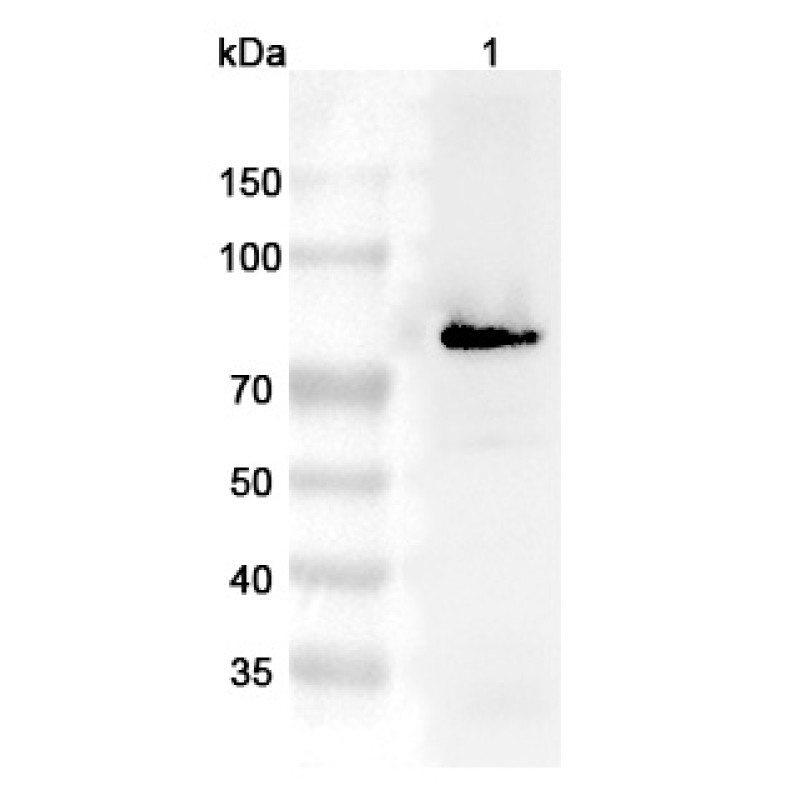
 Western blot
Western blot analysis was performed using anti-PRKCG polyclonal antibody at 1μg/ml on various samples.
Lane 1: Mouse cerebellum lysate
Datasheet