

Anti-Human TIGIT Reference Antibody (Dargistotug, RUO)
- Catalog number: BS11389
- Availability: In Stock
$370.00
- Ex Tax: $370.00
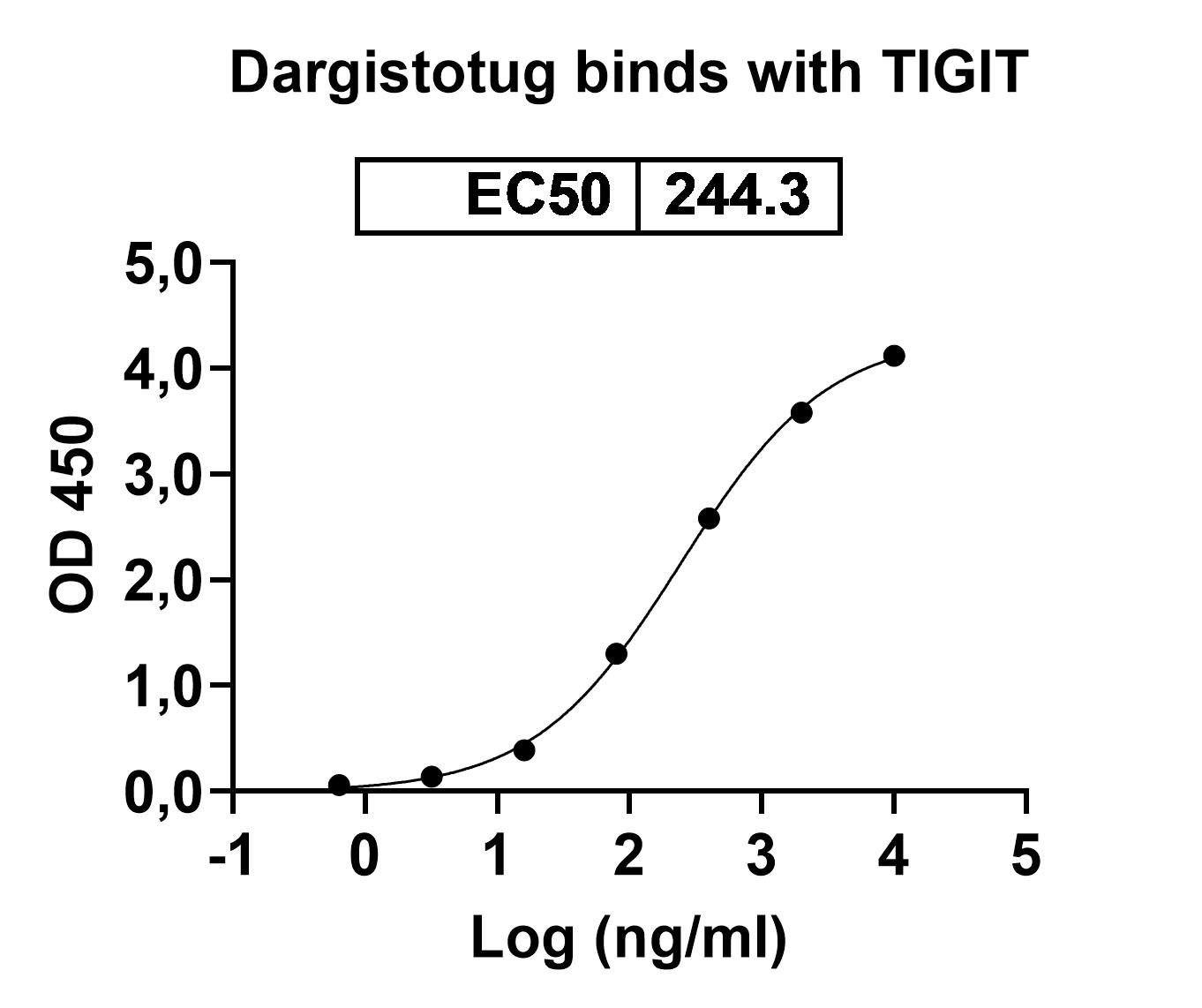
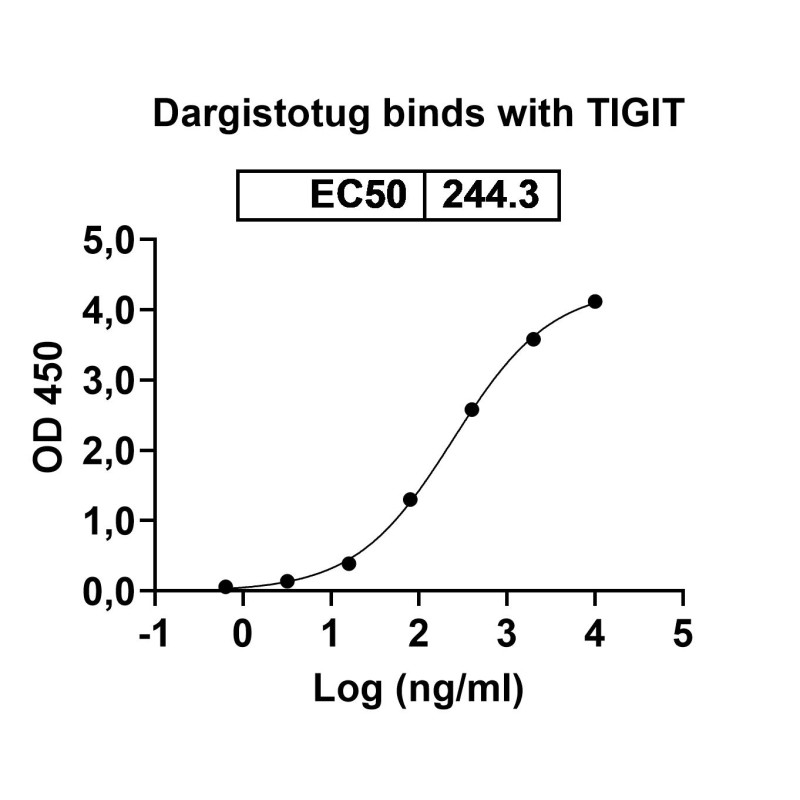
Description: Dargistotug (BS11389) is a research-grade recombinant antibody targeting VSTM3. Produced in mammalian cells with native-like glycosylation.
Highlights:
• Research Grade — For PK/PD studies, assay development, and ADA research.
• Native Glycosylation — Mammalian expression ensures native-like patterns.
Host species: Human
Isotype: IgG1-kappa
Species reactivity: Human
Immunogen:
Form: Liquid
Storage instructions:
Storage buffer: 0.01M PBS, pH7.4.
Concentration: 1mg/ml
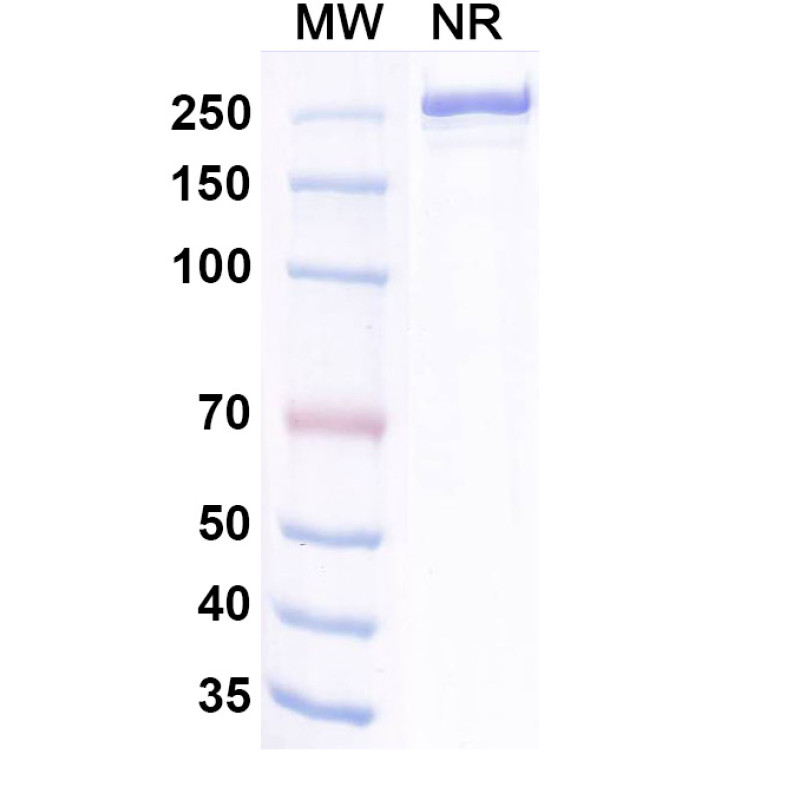
Purity: >95% as determined by SDS-PAGE.
Clonality: Monoclonal
Applications: Research Grade Biosimilar
Target: VSTM3,TIGIT,V-setandtransmembranedomain-containingprotein3,VSIG9,V-setandimmunoglobulindomain-containingprotein9,T-cellimmunoreceptorwithIgandITIMdomains
Purification: Protein A/G purified from cell culture supernatant.
Endotoxin level: <1EU/mg, determined by LAL gel clotting assay
Expression system: Mammalian Cells
Stability and Storage: Use a manual defrost freezer and avoid repeated freeze-thaw cycles. Store at 4°C short term (1-2 weeks). Store at -20°C 12 months. Store at -80°C long term.
Alternative Names: CAS:2649362-29-6
Background: T-cell immunoreceptor with Ig and ITIM domains (TIGIT) is a ~26 kDa protein. Inhibitory receptor that plays a role in the modulation of immune responses. Suppresses T-cell activation by promoting the generation of mature immunoregulatory dendritic cells. Upon binding to its ligands PVR/CD155 or NECTIN2/CD112, which are expressed on antigen-presenting cells, sends inhibitory signals to the T-cell or NK cell. Mechanistically, interaction with ligand leads to phosphorylation of the cytoplasmic tail by Src family tyrosine kinases such as FYN or LCK, allowing subsequent binding to adapter GRB2 and SHIP1/INPP5D. In turn, inhibits PI3K and MAPK signaling cascades.
References:
1. Yu, X. et al. (2009) Nature immunology 10, 48-57. PMID: 19011627
2. Liu, S. et al. (2013) Cell death and differentiation 20, 456-64. PMID: 23154388
3. Li, M. et al. (2014) The Journal of biological chemistry 289, 17647-57. PMID: 24817116
4. Reches, A. et al. (2020) Journal for immunotherapy of cancer 8. PMID: 32503945
Note: For research use only. Not suitable for clinical or therapeutic use.
Highlights:
• Research Grade — For PK/PD studies, assay development, and ADA research.
• Native Glycosylation — Mammalian expression ensures native-like patterns.
Host species: Human
Isotype: IgG1-kappa
Species reactivity: Human
Immunogen:
Form: Liquid
Storage instructions:
Storage buffer: 0.01M PBS, pH7.4.
Concentration: 1mg/ml
Purity: >95% as determined by SDS-PAGE.
Clonality: Monoclonal
Applications: Research Grade Biosimilar
Target: VSTM3,TIGIT,V-setandtransmembranedomain-containingprotein3,VSIG9,V-setandimmunoglobulindomain-containingprotein9,T-cellimmunoreceptorwithIgandITIMdomains
Purification: Protein A/G purified from cell culture supernatant.
Endotoxin level: <1EU/mg, determined by LAL gel clotting assay
Expression system: Mammalian Cells
Stability and Storage: Use a manual defrost freezer and avoid repeated freeze-thaw cycles. Store at 4°C short term (1-2 weeks). Store at -20°C 12 months. Store at -80°C long term.
Alternative Names: CAS:2649362-29-6
Background: T-cell immunoreceptor with Ig and ITIM domains (TIGIT) is a ~26 kDa protein. Inhibitory receptor that plays a role in the modulation of immune responses. Suppresses T-cell activation by promoting the generation of mature immunoregulatory dendritic cells. Upon binding to its ligands PVR/CD155 or NECTIN2/CD112, which are expressed on antigen-presenting cells, sends inhibitory signals to the T-cell or NK cell. Mechanistically, interaction with ligand leads to phosphorylation of the cytoplasmic tail by Src family tyrosine kinases such as FYN or LCK, allowing subsequent binding to adapter GRB2 and SHIP1/INPP5D. In turn, inhibits PI3K and MAPK signaling cascades.
References:
1. Yu, X. et al. (2009) Nature immunology 10, 48-57. PMID: 19011627
2. Liu, S. et al. (2013) Cell death and differentiation 20, 456-64. PMID: 23154388
3. Li, M. et al. (2014) The Journal of biological chemistry 289, 17647-57. PMID: 24817116
4. Reches, A. et al. (2020) Journal for immunotherapy of cancer 8. PMID: 32503945
Note: For research use only. Not suitable for clinical or therapeutic use.