


Anti-Human LAG-3 Reference Antibody (Favezelimab, RUO)
- Catalog number: BS11441
- Availability: In Stock
$176.00
- Ex Tax: $176.00
Description: Favezelimab (BS11441) is a research-grade recombinant antibody targeting CD223. Produced in mammalian cells with native-like glycosylation.
Highlights:
• Research Grade — For PK/PD studies, assay development, and ADA research.
• Native Glycosylation — Mammalian expression ensures native-like patterns.
Host species: Humanized
Isotype: IgG4-kappa
Species reactivity: Human
Immunogen:
Form: Liquid
Storage instructions:
Storage buffer: 0.01M PBS, pH7.4.
Concentration: 1mg/ml
Purity: >95% as determined by SDS-PAGE.
Clonality: Monoclonal
Applications: Research Grade Biosimilar
Target: FDC,LAG3,Lymphocyteactivationgene3protein,CD223,sLAG-3,LAG-3
Purification: Protein A/G purified from cell culture supernatant.
Endotoxin level: <1EU/mg, determined by LAL gel clotting assay
Expression system: Mammalian Cells
Stability and Storage: Use a manual defrost freezer and avoid repeated freeze-thaw cycles. Store at 4°C short term (1-2 weeks). Store at -20°C 12 months. Store at -80°C long term.
Alternative Names: MK-4280,Mavezelimab,PL123
Background: Lymphocyte activation gene 3 protein (CD223/LAG3) is a ~57 kDa protein. Inhibitory receptor on antigen activated T-cells. Delivers inhibitory signals upon binding to ligands, such as MHC class II, its main ligand present at the surface of antigen-presenting cells (APCs), and FGL1, which is secreted by hepatocytes and certain types of tumor cells. Ligand-binding initiates a signaling that inhibits the T-cell receptor (TCR) in the immunological synapse, preventing T-cell activation. Mechanistically, ligand-binding promotes (1) ubiquitination of the KIEELE motif, unleashing the RRFSALE motif from the membrane and (2) leading to the formation of condensates with the TCR component CD3E, thereby disrupting the association between CD3E and LCK and preventing TCR activation. May inhibit antigen-specific T-cell activation in synergy with PDCD1/PD-1. CD223 is the therapeutic target of relatlimab (Opdualag).
References:
1. Camisaschi, C. et al. (2010) Journal of immunology (Baltimore, Md. : 1950) 184, 6545-51. PMID: 20421648
2. Ming, Q. et al. (2022) Nature immunology 23, 1031-1041. PMID: 35761082
3. Huard, B. et al. (1994) European journal of immunology 24, 3216-21. PMID: 780575
4. Huard, B. et al. (1996) European journal of immunology 26, 1180-6. PMID: 8647185
5. Wang, J. et al. (2019) Cell 176, 334-347.e12. PMID: 30580966
6. MacLachlan, BJ. et al. (2021) European journal of immunology 51, 331-341. PMID: 32920841
7. Petersen, J. et al. (2024) Science immunology 9, eads5122. PMID: 39671469
8. Huard, B. et al. (1995) European journal of immunology 25, 2718-21. PMID: 75891521
9. Jiang, Y. et al. (2025) Cell 188, 2354-2371.e18. PMID: 40101708
Note: For research use only. Not suitable for clinical or therapeutic use.
Highlights:
• Research Grade — For PK/PD studies, assay development, and ADA research.
• Native Glycosylation — Mammalian expression ensures native-like patterns.
Host species: Humanized
Isotype: IgG4-kappa
Species reactivity: Human
Immunogen:
Form: Liquid
Storage instructions:
Storage buffer: 0.01M PBS, pH7.4.
Concentration: 1mg/ml
Purity: >95% as determined by SDS-PAGE.
Clonality: Monoclonal
Applications: Research Grade Biosimilar
Target: FDC,LAG3,Lymphocyteactivationgene3protein,CD223,sLAG-3,LAG-3
Purification: Protein A/G purified from cell culture supernatant.
Endotoxin level: <1EU/mg, determined by LAL gel clotting assay
Expression system: Mammalian Cells
Stability and Storage: Use a manual defrost freezer and avoid repeated freeze-thaw cycles. Store at 4°C short term (1-2 weeks). Store at -20°C 12 months. Store at -80°C long term.
Alternative Names: MK-4280,Mavezelimab,PL123
Background: Lymphocyte activation gene 3 protein (CD223/LAG3) is a ~57 kDa protein. Inhibitory receptor on antigen activated T-cells. Delivers inhibitory signals upon binding to ligands, such as MHC class II, its main ligand present at the surface of antigen-presenting cells (APCs), and FGL1, which is secreted by hepatocytes and certain types of tumor cells. Ligand-binding initiates a signaling that inhibits the T-cell receptor (TCR) in the immunological synapse, preventing T-cell activation. Mechanistically, ligand-binding promotes (1) ubiquitination of the KIEELE motif, unleashing the RRFSALE motif from the membrane and (2) leading to the formation of condensates with the TCR component CD3E, thereby disrupting the association between CD3E and LCK and preventing TCR activation. May inhibit antigen-specific T-cell activation in synergy with PDCD1/PD-1. CD223 is the therapeutic target of relatlimab (Opdualag).
References:
1. Camisaschi, C. et al. (2010) Journal of immunology (Baltimore, Md. : 1950) 184, 6545-51. PMID: 20421648
2. Ming, Q. et al. (2022) Nature immunology 23, 1031-1041. PMID: 35761082
3. Huard, B. et al. (1994) European journal of immunology 24, 3216-21. PMID: 780575
4. Huard, B. et al. (1996) European journal of immunology 26, 1180-6. PMID: 8647185
5. Wang, J. et al. (2019) Cell 176, 334-347.e12. PMID: 30580966
6. MacLachlan, BJ. et al. (2021) European journal of immunology 51, 331-341. PMID: 32920841
7. Petersen, J. et al. (2024) Science immunology 9, eads5122. PMID: 39671469
8. Huard, B. et al. (1995) European journal of immunology 25, 2718-21. PMID: 75891521
9. Jiang, Y. et al. (2025) Cell 188, 2354-2371.e18. PMID: 40101708
Note: For research use only. Not suitable for clinical or therapeutic use.
Images
-
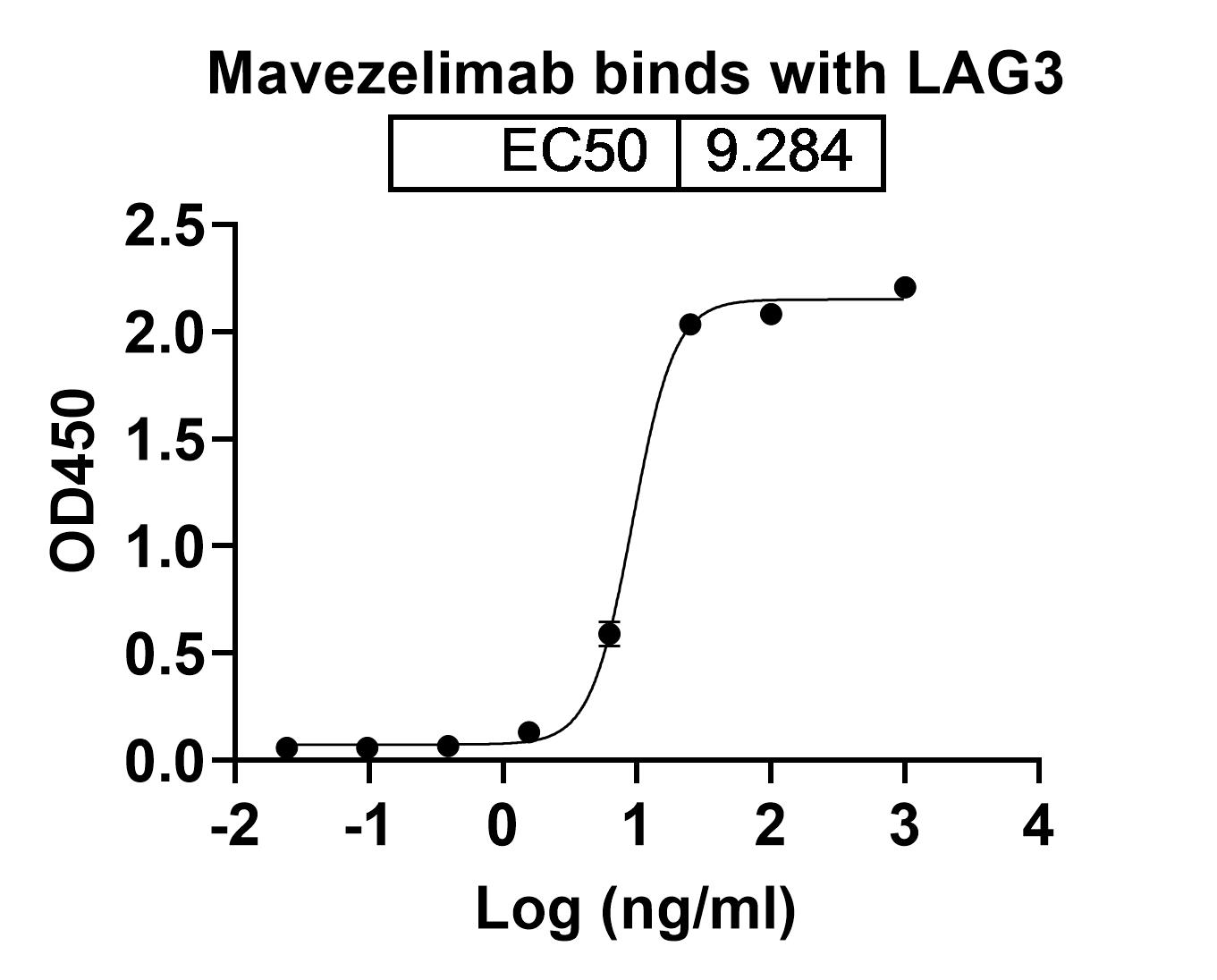 Bioactivity
Detects Human CD223/LAG3 in indirect ELISAs.