

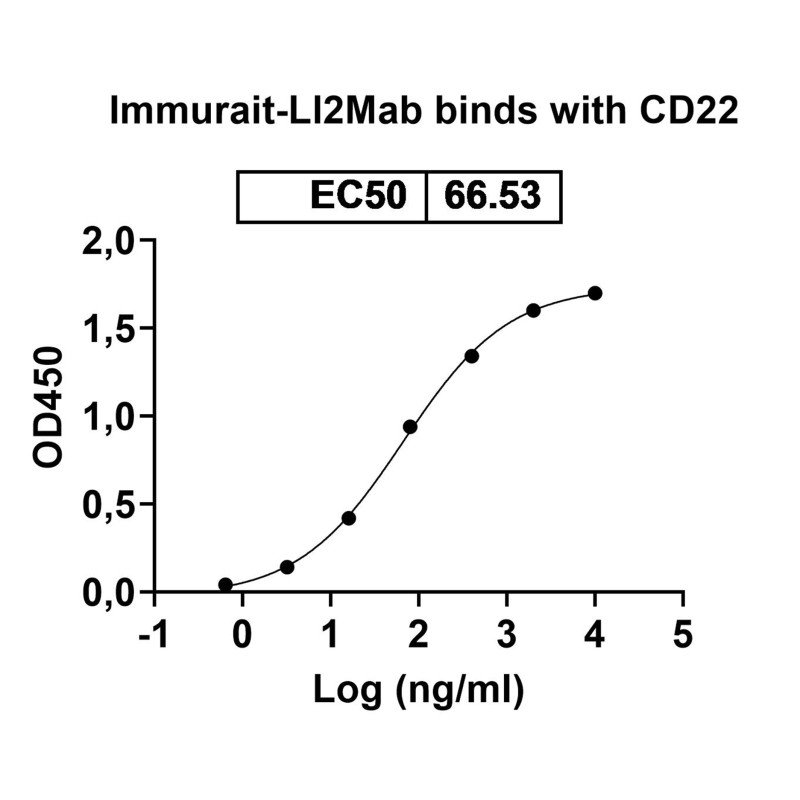
Anti-Human Siglec-2/CD22 Reference Antibody (Immurait-Ll2Mab, RUO)
- Catalog number: BS10102
- Availability: In Stock
$326.00
- Ex Tax: $326.00
Description: Immurait-Ll2Mab (BS10102) is a research-grade recombinant antibody targeting CD22. Produced in mammalian cells with native-like glycosylation.
Highlights:
• Research Grade — For PK/PD studies, assay development, and ADA research.
• Native Glycosylation — Mammalian expression ensures native-like patterns.
Host species: Mouse
Isotype: IgG2a-kappa
Species reactivity: Human
Immunogen:
Form: Liquid
Storage instructions:
Storage buffer: 0.01M PBS, pH7.4.
Concentration: 1mg/ml
Purity: >95% as determined by SDS-PAGE.
Clonality: Monoclonal
Applications: Research Grade Biosimilar
Target: Sialicacid-bindingIg-likelectin2,Siglec-2,CD22,T-cellsurfaceantigenLeu-14,BL-CAM,SIGLEC2,B-lymphocytecelladhesionmolecule,B-cellreceptorCD22
Purification: Protein A/G purified from cell culture supernatant.
Endotoxin level: <1EU/mg, determined by LAL gel clotting assay
Expression system: Mammalian Cells
Stability and Storage: Use a manual defrost freezer and avoid repeated freeze-thaw cycles. Store at 4°C short term (1-2 weeks). Store at -20°C 12 months. Store at -80°C long term.
Alternative Names:
Background: B-cell receptor CD22 is a ~95 kDa protein. Most highly expressed siglec (sialic acid-binding immunoglobulin-like lectin) on B-cells that plays a role in various aspects of B-cell biology including differentiation, antigen presentation, and trafficking to bone marrow. Binds to alpha 2,6-linked sialic acid residues of surface molecules such as CD22 itself, CD45 and IgM in a cis configuration. Can also bind to ligands on other cells as an adhesion molecule in a trans configuration. Acts as an inhibitory coreceptor on the surface of B-cells and inhibits B-cell receptor induced signaling, characterized by inhibition of the calcium mobilization and cellular activation. Mechanistically, the immunoreceptor tyrosine-based inhibitory motif domain is phosphorylated by the Src kinase LYN, which in turn leads to the recruitment of the protein tyrosine phosphatase 1/PTPN6, leading to the negative regulation of BCR signaling. CD22 is the therapeutic target of inotuzumab ozogamicin (Besponsa).
References:
1. Meyer, SJ. et al. (2021) Journal of immunology (Baltimore, Md. : 1950) 207, 1018-1032. PMID: 34330755
2. Law, CL. et al. (1996) The Journal of experimental medicine 183, 547-60. PMID: 8627166
3. Ramya, TN. et al. (2010) Molecular & cellular proteomics : MCP 9, 1339-51. PMID: 20172905
4. Séïté, JF. et al. (2010) Blood 116, 1698-704. PMID: 20516366
Note: For research use only. Not suitable for clinical or therapeutic use.
Highlights:
• Research Grade — For PK/PD studies, assay development, and ADA research.
• Native Glycosylation — Mammalian expression ensures native-like patterns.
Host species: Mouse
Isotype: IgG2a-kappa
Species reactivity: Human
Immunogen:
Form: Liquid
Storage instructions:
Storage buffer: 0.01M PBS, pH7.4.
Concentration: 1mg/ml
Purity: >95% as determined by SDS-PAGE.
Clonality: Monoclonal
Applications: Research Grade Biosimilar
Target: Sialicacid-bindingIg-likelectin2,Siglec-2,CD22,T-cellsurfaceantigenLeu-14,BL-CAM,SIGLEC2,B-lymphocytecelladhesionmolecule,B-cellreceptorCD22
Purification: Protein A/G purified from cell culture supernatant.
Endotoxin level: <1EU/mg, determined by LAL gel clotting assay
Expression system: Mammalian Cells
Stability and Storage: Use a manual defrost freezer and avoid repeated freeze-thaw cycles. Store at 4°C short term (1-2 weeks). Store at -20°C 12 months. Store at -80°C long term.
Alternative Names:
Background: B-cell receptor CD22 is a ~95 kDa protein. Most highly expressed siglec (sialic acid-binding immunoglobulin-like lectin) on B-cells that plays a role in various aspects of B-cell biology including differentiation, antigen presentation, and trafficking to bone marrow. Binds to alpha 2,6-linked sialic acid residues of surface molecules such as CD22 itself, CD45 and IgM in a cis configuration. Can also bind to ligands on other cells as an adhesion molecule in a trans configuration. Acts as an inhibitory coreceptor on the surface of B-cells and inhibits B-cell receptor induced signaling, characterized by inhibition of the calcium mobilization and cellular activation. Mechanistically, the immunoreceptor tyrosine-based inhibitory motif domain is phosphorylated by the Src kinase LYN, which in turn leads to the recruitment of the protein tyrosine phosphatase 1/PTPN6, leading to the negative regulation of BCR signaling. CD22 is the therapeutic target of inotuzumab ozogamicin (Besponsa).
References:
1. Meyer, SJ. et al. (2021) Journal of immunology (Baltimore, Md. : 1950) 207, 1018-1032. PMID: 34330755
2. Law, CL. et al. (1996) The Journal of experimental medicine 183, 547-60. PMID: 8627166
3. Ramya, TN. et al. (2010) Molecular & cellular proteomics : MCP 9, 1339-51. PMID: 20172905
4. Séïté, JF. et al. (2010) Blood 116, 1698-704. PMID: 20516366
Note: For research use only. Not suitable for clinical or therapeutic use.
Images
-
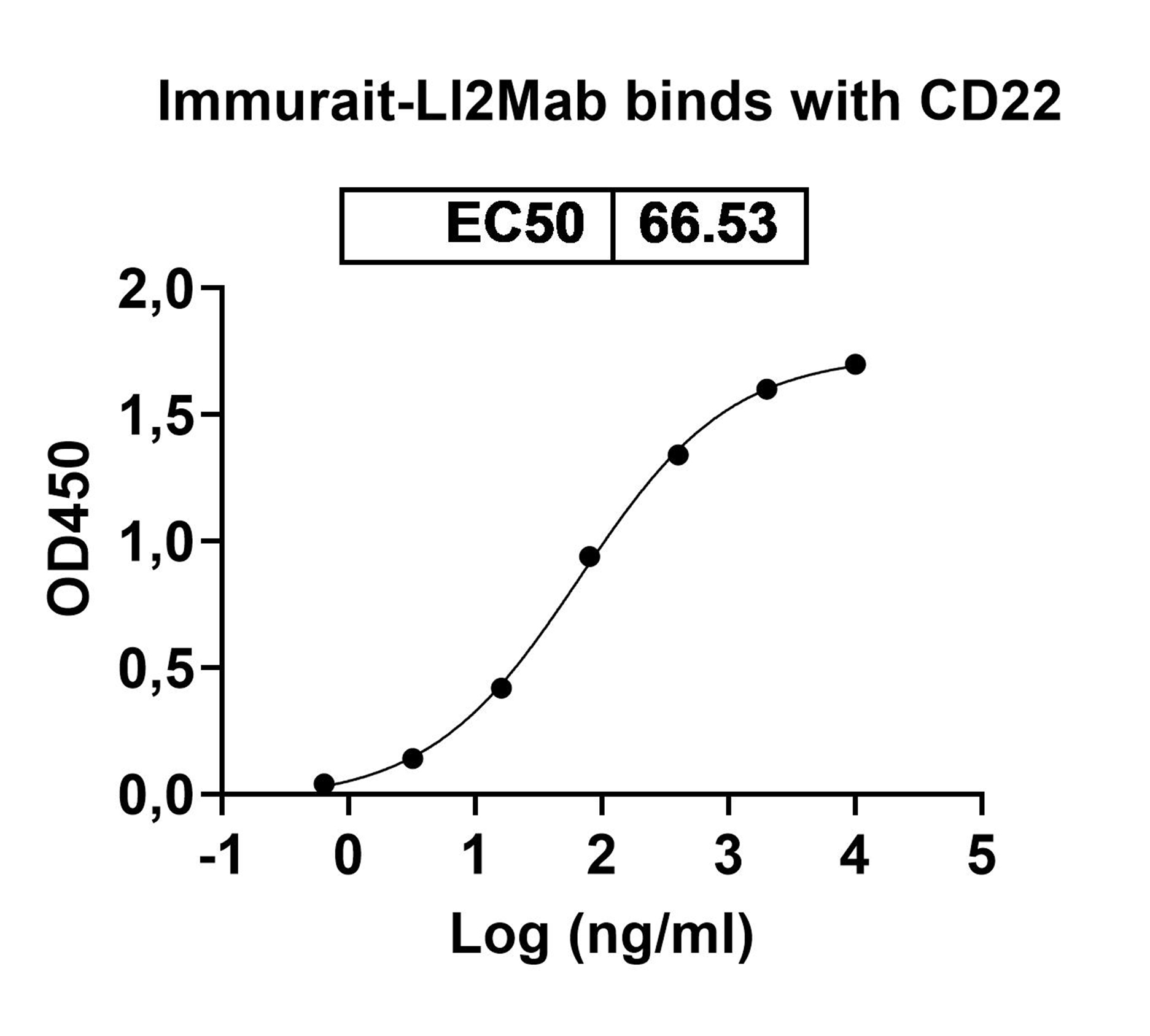 Bioactivity
Detects Human CD22 in indirect ELISAs.
-
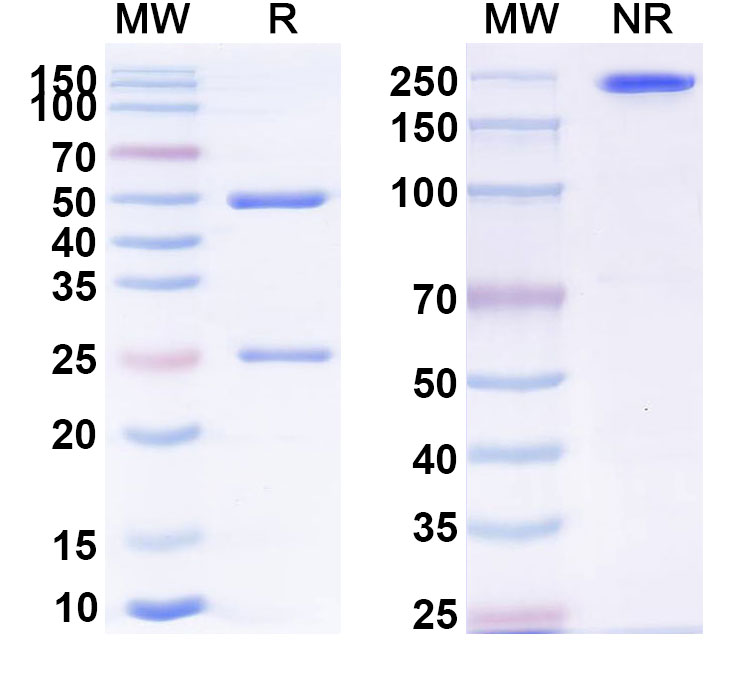 SDS-PAGE
SDS-PAGE for Research Grade Immurait-Ll2Mab.