
Anti-Human LHR&CD44 Reference Antibody (Bivatuzumab, RUO)
- Catalog number: BS10130
- Availability: In Stock
$176.00
- Ex Tax: $176.00
Description: Bivatuzumab (BS10130) is a research-grade recombinant antibody targeting CD44. Produced in mammalian cells with native-like glycosylation.
Highlights:
• Research Grade — For PK/PD studies, assay development, and ADA research.
• Native Glycosylation — Mammalian expression ensures native-like patterns.
Host species: Humanized
Isotype: IgG1-kappa
Species reactivity: Human
Immunogen:
Form: Liquid
Storage instructions:
Storage buffer: 0.01M PBS, pH7.4.
Concentration: 1mg/ml
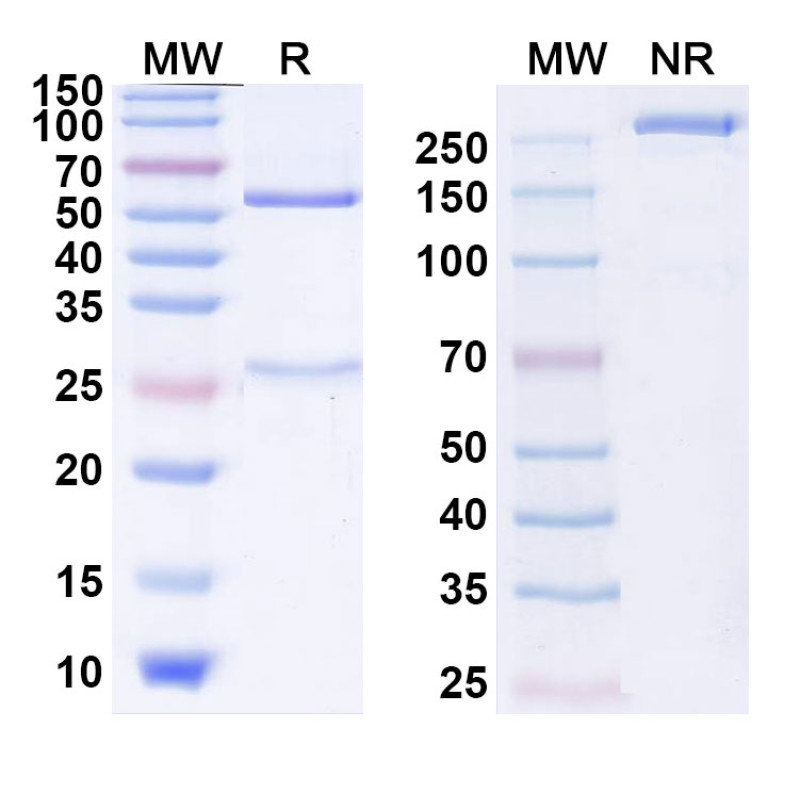
Purity: >95% as determined by SDS-PAGE.
Clonality: Monoclonal
Applications: Research Grade Biosimilar
Target: Hyaluronatereceptor,MDU2,HUTCH-I,MDU3,PhagocyticglycoproteinI,CDw44,Epican,Phagocyticglycoprotein1,ECMR-III,CD44,Hermesantigen,PGP-1,PGP-I,GP90lymphocytehoming/adhesionreceptor,LHR,CD44antigen,MIC4,ExtracellularmatrixreceptorIII,Heparansulfateproteoglycan
Purification: Protein A/G purified from cell culture supernatant.
Endotoxin level: <1EU/mg, determined by LAL gel clotting assay
Expression system: Mammalian Cells
Stability and Storage: Use a manual defrost freezer and avoid repeated freeze-thaw cycles. Store at 4°C short term (1-2 weeks). Store at -20°C 12 months. Store at -80°C long term.
Alternative Names: BIWA4,CAS:214559-60-1
Background: CD44 antigen is a ~81 kDa protein. Cell-surface receptor that plays a role in cell-cell interactions, cell adhesion and migration, helping them to sense and respond to changes in the tissue microenvironment. Participates thereby in a wide variety of cellular functions including the activation, recirculation and homing of T-lymphocytes, hematopoiesis, inflammation and response to bacterial infection. Engages, through its ectodomain, extracellular matrix components such as hyaluronan/HA, collagen, growth factors, cytokines or proteases and serves as a platform for signal transduction by assembling, via its cytoplasmic domain, protein complexes containing receptor kinases and membrane proteases. Such effectors include PKN2, the RhoGTPases RAC1 and RHOA, Rho-kinases and phospholipase C that coordinate signaling pathways promoting calcium mobilization and actin-mediated cytoskeleton reorganization essential for cell migration and adhesion. Upon interaction with LGALS9 ligand, activates downstream signaling components including LCK, ERK and MAPK to promotes NK cell activation.
References:
1. Vikesaa, J. et al. (2006) The EMBO journal 25, 1456-68. PMID: 16541107
2. Crosby, HA. et al. (2009) Journal of hepatology 51, 734-49. PMID: 1970372
3. Yoshida, T. et al. (2012) Pathology international 62, 463-70. PMID: 22726066
4. Funaro, A. et al. (1994) Human immunology 40, 267-78. PMID: 7528188
5. Casalino-Matsuda, SM. et al. (2009) American journal of respiratory cell and molecular biology 40, 277-85. PMID: 18757307
6. Midgley, AC. et al. (2013) The Journal of biological chemistry 288, 14824-38. PMID: 23589287
7. Bourguignon, LY. et al. (2004) The Journal of biological chemistry 279, 29654-69. PMID: 1512364
8. Rahmati, A. et al. (2023) Frontiers in immunology 14, 1131379. PMID: 37006235
Note: For research use only. Not suitable for clinical or therapeutic use.
Highlights:
• Research Grade — For PK/PD studies, assay development, and ADA research.
• Native Glycosylation — Mammalian expression ensures native-like patterns.
Host species: Humanized
Isotype: IgG1-kappa
Species reactivity: Human
Immunogen:
Form: Liquid
Storage instructions:
Storage buffer: 0.01M PBS, pH7.4.
Concentration: 1mg/ml
Purity: >95% as determined by SDS-PAGE.
Clonality: Monoclonal
Applications: Research Grade Biosimilar
Target: Hyaluronatereceptor,MDU2,HUTCH-I,MDU3,PhagocyticglycoproteinI,CDw44,Epican,Phagocyticglycoprotein1,ECMR-III,CD44,Hermesantigen,PGP-1,PGP-I,GP90lymphocytehoming/adhesionreceptor,LHR,CD44antigen,MIC4,ExtracellularmatrixreceptorIII,Heparansulfateproteoglycan
Purification: Protein A/G purified from cell culture supernatant.
Endotoxin level: <1EU/mg, determined by LAL gel clotting assay
Expression system: Mammalian Cells
Stability and Storage: Use a manual defrost freezer and avoid repeated freeze-thaw cycles. Store at 4°C short term (1-2 weeks). Store at -20°C 12 months. Store at -80°C long term.
Alternative Names: BIWA4,CAS:214559-60-1
Background: CD44 antigen is a ~81 kDa protein. Cell-surface receptor that plays a role in cell-cell interactions, cell adhesion and migration, helping them to sense and respond to changes in the tissue microenvironment. Participates thereby in a wide variety of cellular functions including the activation, recirculation and homing of T-lymphocytes, hematopoiesis, inflammation and response to bacterial infection. Engages, through its ectodomain, extracellular matrix components such as hyaluronan/HA, collagen, growth factors, cytokines or proteases and serves as a platform for signal transduction by assembling, via its cytoplasmic domain, protein complexes containing receptor kinases and membrane proteases. Such effectors include PKN2, the RhoGTPases RAC1 and RHOA, Rho-kinases and phospholipase C that coordinate signaling pathways promoting calcium mobilization and actin-mediated cytoskeleton reorganization essential for cell migration and adhesion. Upon interaction with LGALS9 ligand, activates downstream signaling components including LCK, ERK and MAPK to promotes NK cell activation.
References:
1. Vikesaa, J. et al. (2006) The EMBO journal 25, 1456-68. PMID: 16541107
2. Crosby, HA. et al. (2009) Journal of hepatology 51, 734-49. PMID: 1970372
3. Yoshida, T. et al. (2012) Pathology international 62, 463-70. PMID: 22726066
4. Funaro, A. et al. (1994) Human immunology 40, 267-78. PMID: 7528188
5. Casalino-Matsuda, SM. et al. (2009) American journal of respiratory cell and molecular biology 40, 277-85. PMID: 18757307
6. Midgley, AC. et al. (2013) The Journal of biological chemistry 288, 14824-38. PMID: 23589287
7. Bourguignon, LY. et al. (2004) The Journal of biological chemistry 279, 29654-69. PMID: 1512364
8. Rahmati, A. et al. (2023) Frontiers in immunology 14, 1131379. PMID: 37006235
Note: For research use only. Not suitable for clinical or therapeutic use.
Images
-
 SDS-PAGE
SDS-PAGE for Research Grade Bivatuzumab.