

Anti-Human CD274/PD-L1/B7-H1 Reference Antibody (ABM101)
- Catalog number: BS11822
- Availability: In Stock
$370.00
- Ex Tax: $370.00
Description: Anti-Human CD274/PD-L1/B7-H1 (ABM101) (BS11822) is a research-grade recombinant antibody targeting CD1. Produced in mammalian cells with native-like glycosylation.
Highlights:
• Research Grade — For PK/PD studies, assay development, and ADA research.
• Native Glycosylation — Mammalian expression ensures native-like patterns.
Host species: Human
Isotype: IgG
Species reactivity: Human
Immunogen:
Form: Liquid
Storage instructions:
Storage buffer: 0.01M PBS, pH7.4.
Concentration: 1mg/ml
Purity: >95% as determined by SDS-PAGE.
Clonality: Monoclonal
Applications: Research Grade Biosimilar
Target: B7-H1,Programmedcelldeath1ligand1,PDCD1ligand1,PDCD1L1,B7homolog1,PDCD1LG1,PDL1,hPD-L1,Programmeddeathligand1,B7H1,PD-L1,CD274
Purification: Protein A/G purified from cell culture supernatant.
Endotoxin level: <1EU/mg, determined by LAL gel clotting assay
Expression system: Mammalian Cells
Stability and Storage: Use a manual defrost freezer and avoid repeated freeze-thaw cycles. Store at 4°C short term (1-2 weeks). Store at -20°C 12 months. Store at -80°C long term.
Alternative Names: ABM101
Background: Programmed cell death 1 ligand 1 (CD274/PD-L1) is a ~33 kDa protein. Plays a critical role in induction and maintenance of immune tolerance to self. As a ligand for the inhibitory receptor PDCD1/PD-1, modulates the activation threshold of T-cells and limits T-cell effector response. Through a yet unknown activating receptor, may costimulate T-cell subsets that predominantly produce interleukin-10 (IL10). Can also act as a transcription coactivator: in response to hypoxia, translocates into the nucleus via its interaction with phosphorylated STAT3 and promotes transcription of GSDMC, leading to pyroptosis. CD274 is the therapeutic target of atezolizumab (Tecentriq) and durvalumab (Imfinzi).
References:
1. Freeman, GJ. et al. (2000) The Journal of experimental medicine 192, 1027-34. PMID: 11015443
2. Mezzadra, R. et al. (2017) Nature 549, 106-110. PMID: 2881341
3. Burr, ML. et al. (2017) Nature 549, 101-105. PMID: 28813417
4. Huang, X. et al. (2019) Cancer immunology research 7, 1580-1590. PMID: 31399419
5. Kennedy, A. et al. (2023) The EMBO journal 42, e111556. PMID: 36727298
6. Dong, H. et al. (1999) Nature medicine 5, 1365-9. PMID: 10581077
7. Hou, J. et al. (2020) Nature cell biology 22, 1264-1275. PMID: 32929201
Note: For research use only. Not suitable for clinical or therapeutic use.
Highlights:
• Research Grade — For PK/PD studies, assay development, and ADA research.
• Native Glycosylation — Mammalian expression ensures native-like patterns.
Host species: Human
Isotype: IgG
Species reactivity: Human
Immunogen:
Form: Liquid
Storage instructions:
Storage buffer: 0.01M PBS, pH7.4.
Concentration: 1mg/ml
Purity: >95% as determined by SDS-PAGE.
Clonality: Monoclonal
Applications: Research Grade Biosimilar
Target: B7-H1,Programmedcelldeath1ligand1,PDCD1ligand1,PDCD1L1,B7homolog1,PDCD1LG1,PDL1,hPD-L1,Programmeddeathligand1,B7H1,PD-L1,CD274
Purification: Protein A/G purified from cell culture supernatant.
Endotoxin level: <1EU/mg, determined by LAL gel clotting assay
Expression system: Mammalian Cells
Stability and Storage: Use a manual defrost freezer and avoid repeated freeze-thaw cycles. Store at 4°C short term (1-2 weeks). Store at -20°C 12 months. Store at -80°C long term.
Alternative Names: ABM101
Background: Programmed cell death 1 ligand 1 (CD274/PD-L1) is a ~33 kDa protein. Plays a critical role in induction and maintenance of immune tolerance to self. As a ligand for the inhibitory receptor PDCD1/PD-1, modulates the activation threshold of T-cells and limits T-cell effector response. Through a yet unknown activating receptor, may costimulate T-cell subsets that predominantly produce interleukin-10 (IL10). Can also act as a transcription coactivator: in response to hypoxia, translocates into the nucleus via its interaction with phosphorylated STAT3 and promotes transcription of GSDMC, leading to pyroptosis. CD274 is the therapeutic target of atezolizumab (Tecentriq) and durvalumab (Imfinzi).
References:
1. Freeman, GJ. et al. (2000) The Journal of experimental medicine 192, 1027-34. PMID: 11015443
2. Mezzadra, R. et al. (2017) Nature 549, 106-110. PMID: 2881341
3. Burr, ML. et al. (2017) Nature 549, 101-105. PMID: 28813417
4. Huang, X. et al. (2019) Cancer immunology research 7, 1580-1590. PMID: 31399419
5. Kennedy, A. et al. (2023) The EMBO journal 42, e111556. PMID: 36727298
6. Dong, H. et al. (1999) Nature medicine 5, 1365-9. PMID: 10581077
7. Hou, J. et al. (2020) Nature cell biology 22, 1264-1275. PMID: 32929201
Note: For research use only. Not suitable for clinical or therapeutic use.
Images
-
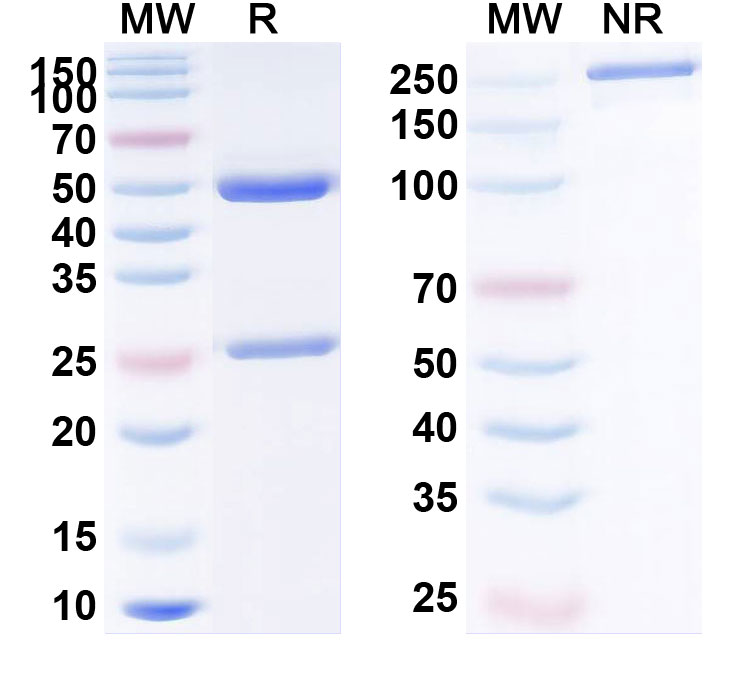 SDS-PAGE
SDS-PAGE for Research Grade Anti-Human CD274/PD-L1/B7-H1 (ABM101)