
Anti-Clostridium botulinum botA/BOTOX Nanobody (SAA0931)
- Catalog number: RA11723
- Availability: In Stock
$191.00
- Ex Tax: $191.00
Description: Anti-Clostridium botulinum botA/BOTOX Nanobody (SAA0931) [SAA0931] (RA11723) is a alpaca monoclonal antibody detecting BOTOX in ELISA.
Host species: Alpaca
Isotype: VHH-8His-Cys-tag
Species reactivity: Clostridium botulinum (strain Hall / ATCC 3502 / NCTC 13319 / Type A)
Form: Liquid
Storage buffer: 0.01M PBS, pH 7.4.
Concentration: 1 mg/ml
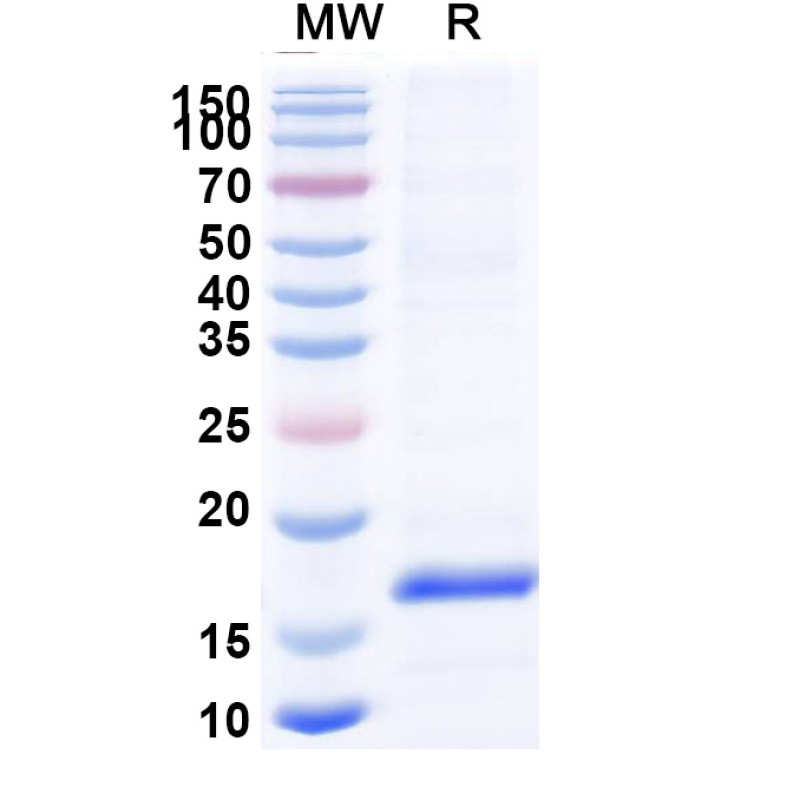
Purity: >95% as determined by SDS-PAGE.
Clonality: Monoclonal
Applications: ELISA
Target: Botulinum neurotoxin type A, BoNT/A, Bontoxilysin-A, BOTOX, Botulinum neurotoxin A light chain, LC, 3.4.24.69, Botulinum neurotoxin A heavy chain, HC, botA, bna, CBO0806, CLC_0862
Purification: Purified by Nickel column.
Endotoxin level: Please contact with the lab for this information.
Stability and Storage: Use a manual defrost freezer and avoid repeated freeze-thaw cycles. Store at 4°C short term (1-2 weeks). Store at -20°C 12 months. Store at -80°C long term.
Alternative Names:
Background: Botulinum neurotoxin type A (botA/BOTOX) is a ~149 kDa protein. Botulinum toxin causes flaccid paralysis by inhibiting neurotransmitter (acetylcholine) release from the presynaptic membranes of nerve terminals of the eukaryotic host skeletal and autonomic nervous system, with frequent heart or respiratory failure. Precursor of botulinum neurotoxin A which has 2 coreceptors; complex polysialylated gangliosides found on neural tissue and specific membrane-anchored proteins of synaptic vesicles. Receptor proteins are exposed on host presynaptic cell membrane during neurotransmitter release, when the toxin heavy chain (HC) binds to them. Upon synaptic vesicle recycling the toxin is taken up via the endocytic pathway. When the pH of the toxin-containing endosome drops a structural rearrangement occurs so that the N-terminus of the HC forms pores that allows the light chain (LC) to translocate into the cytosol.
References:
1. Blasi, J. et al. (1993) Nature 365, 160-3. PMID: 8103915
2. Fu, Z. et al. (2009) Biochemistry 48, 5631-41. PMID: 19476346
Note: For research use only.
Images
-
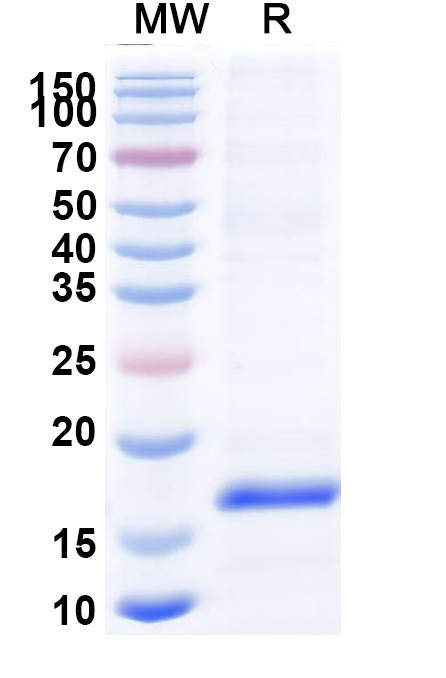 SDS-PAGE
SDS-PAGE for Anti-Clostridium botulinum botA/BOTOX Nanobody (SAA0931)