


Anti-Human HLA-A2 Antibody (3PB2)
- Catalog number: RA12689
- Availability: In Stock
$191.00
- Ex Tax: $191.00
Description: Anti-Human HLA-A2 Antibody (3PB2) [3PB2] (RA12689) is a mouse monoclonal antibody detecting HLA-A in ELISA, FCM. Suitable for Human.
Highlights:
• Flow Cytometry — Validated for flow cytometry applications.
Host species: Mouse
Isotype: IgG1
Species reactivity: Human
Form: Liquid
Storage buffer: 0.01M PBS, pH 7.4.
Concentration: 1 mg/ml
Purity: >95% as determined by SDS-PAGE.
Clonality: Monoclonal
Applications: ELISA, FCM
Target: HLAA, Human leukocyte antigen A, HLA class I histocompatibility antigen, A alpha chain, HLA-A
Purification: Protein A/G purified from cell culture supernatant.
Endotoxin level: Please contact with the lab for this information.
Stability and Storage: Use a manual defrost freezer and avoid repeated freeze-thaw cycles. Store at 4°C short term (1-2 weeks). Store at -20°C 12 months. Store at -80°C long term.
Alternative Names:
Background: HLA class I histocompatibility antigen, A alpha chain (HLA-A2) is a ~40 kDa protein. Antigen-presenting major histocompatibility complex class I (MHCI) molecule. In complex with B2M/beta 2 microglobulin displays primarily viral and tumor-derived peptides on antigen-presenting cells for recognition by alpha-beta T cell receptor (TCR) on HLA-A-restricted CD8-positive T cells, guiding antigen-specific T cell immune response to eliminate infected or transformed cells. May also present self-peptides derived from the signal sequence of secreted or membrane proteins, although T cells specific for these peptides are usually inactivated to prevent autoreactivity. Both the peptide and the MHC molecule are recognized by TCR, the peptide is responsible for the fine specificity of antigen recognition and MHC residues account for the MHC restriction of T cells. Typically presents intracellular peptide antigens of 8 to 13 amino acids that arise from cytosolic proteolysis via IFNG-induced immunoproteasome or via endopeptidase IDE/insulin-degrading enzyme.
References:
1. Fukada, K. et al. (1999) AIDS (London, England) 13, 1413-4. PMID: 10449296
2. Nagata, Y. et al. (2002) Proceedings of the National Academy of Sciences of the United States of America 99, 10629-34. PMID: 12138174
3. Kuzushima, K. et al. (2003) Blood 101, 1460-8. PMID: 12393434
4. Traversari, C. et al. (1992) The Journal of experimental medicine 176, 1453-7. PMID: 1402688
5. Satoh, M. et al. (2005) Vaccine 23, 3783-90. PMID: 15893615
6. Asemissen, AM. et al. (2006) Clinical cancer research : an official journal of the American Association for Cancer Research 12, 7476-82. PMID: 17189421
7. Hadrup, SR. et al. (2009) Nature methods 6, 520-6. PMID: 19543285
8. Matthews, PC. et al. (2011) Journal of immunology (Baltimore, Md. : 1950) 186, 5675-86. PMID: 21498667
9. Shimizu, A. et al. (2013) Scientific reports 3, 3097. PMID: 24192765
10. Quiñones-Parra, S. et al. (2014) Proceedings of the National Academy of Sciences of the United States of America 111, 1049-54. PMID: 24395804
Note: For research use only.
Images
-
 Bioactivity
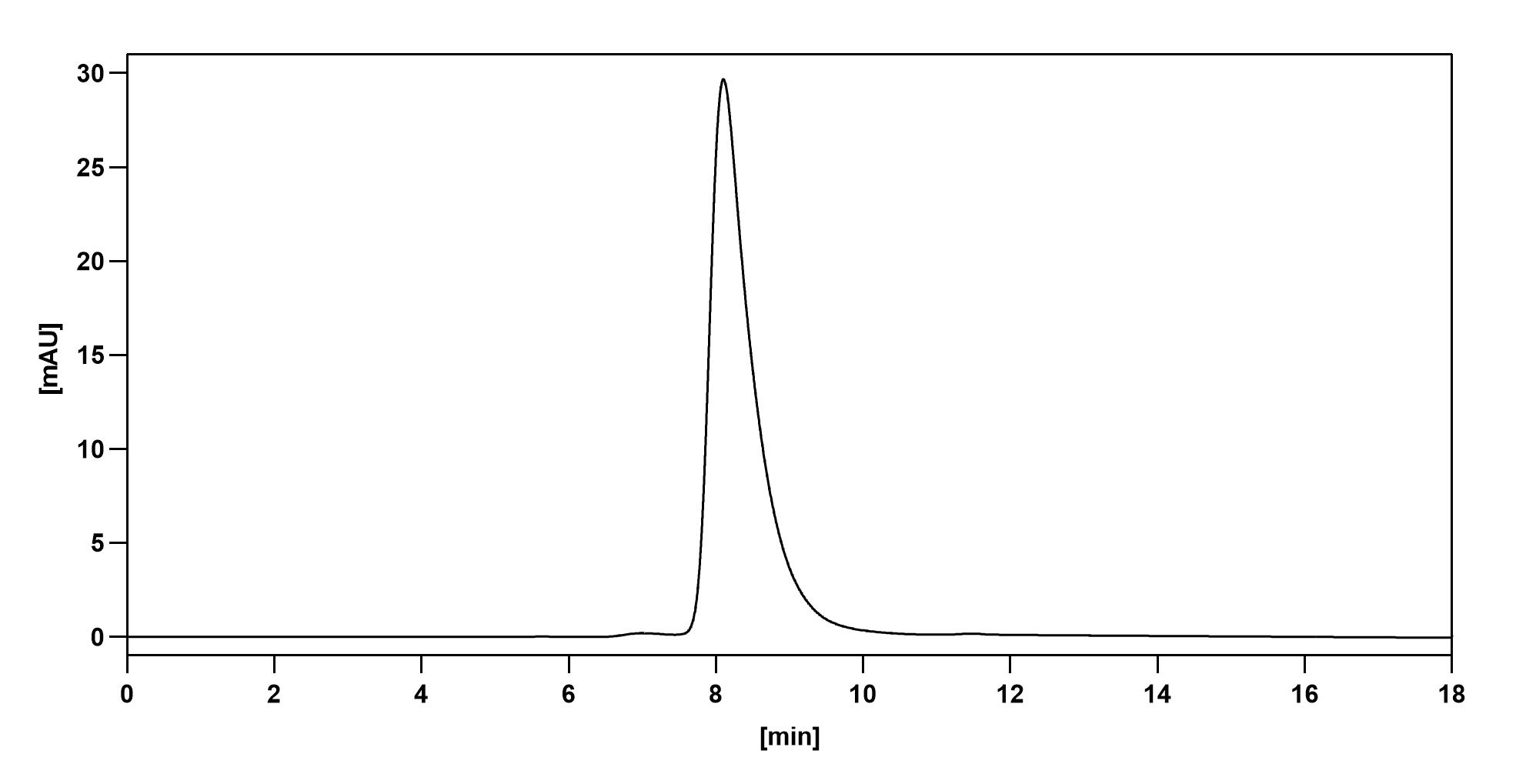
SEC-HPLC detection for Anti-Human HLA-A2 Antibody (3PB2).
-
 SDS-PAGE
SDS-PAGE for Anti-Human HLA-A2 Antibody (3PB2).