
Anti-Human TNFa/TNF-alpha Reference Antibody (KN002)
- Catalog number: BS11961
- Availability: In Stock
$326.00
- Ex Tax: $326.00
Description: Anti-Human TNFa/TNF-alpha (KN002) (BS11961) is a research-grade recombinant antibody targeting CD2. Produced in mammalian cells with native-like glycosylation.
Highlights:
• Research Grade — For PK/PD studies, assay development, and ADA research.
• Native Glycosylation — Mammalian expression ensures native-like patterns.
Host species: Human
Isotype: IgG
Species reactivity: Human
Immunogen:
Form: Liquid
Storage instructions:
Storage buffer: 0.01M PBS, pH7.4.
Concentration: 1mg/ml
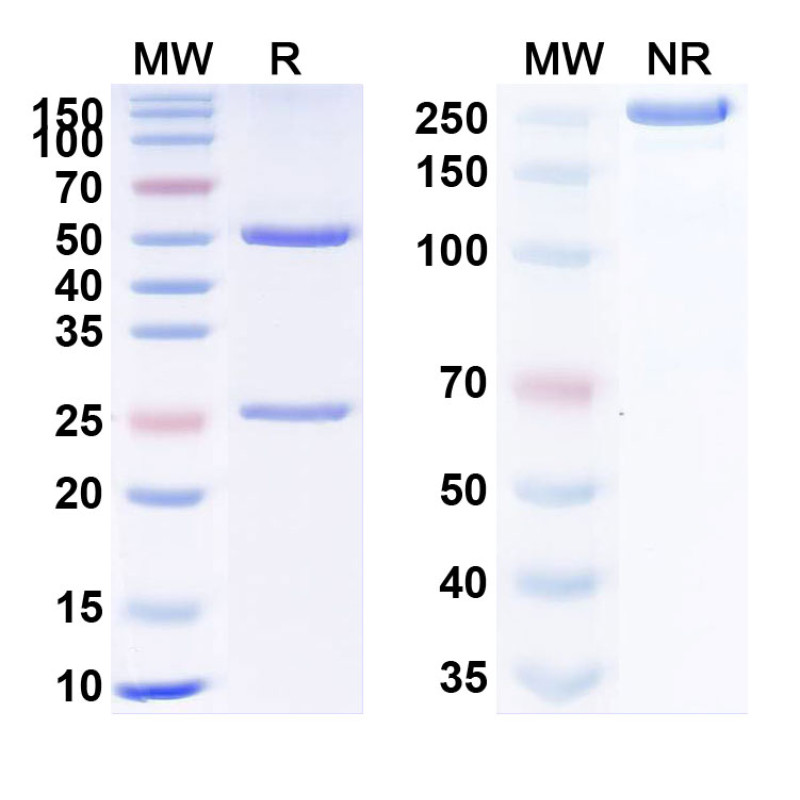
Purity: >95% as determined by SDS-PAGE.
Clonality: Monoclonal
Applications: Research Grade Biosimilar
Target: TNF,Tumornecrosisfactorligandsuperfamilymember2,N-terminalfragment,ICD2,NTF,TNF-a,TNF-alpha,Tumornecrosisfactor,TNFSF2,TNFA,Cachectin,ICD1
Purification: Protein A/G purified from cell culture supernatant.
Endotoxin level: <1EU/mg, determined by LAL gel clotting assay
Expression system: Mammalian Cells
Stability and Storage: Use a manual defrost freezer and avoid repeated freeze-thaw cycles. Store at 4°C short term (1-2 weeks). Store at -20°C 12 months. Store at -80°C long term.
Alternative Names: KN002
Background: Tumor necrosis factor (TNFa/TNF-alpha) is a ~25 kDa protein. Cytokine that binds to TNFRSF1A/TNFR1 and TNFRSF1B/TNFBR. It is mainly secreted by macrophages and can induce cell death of certain tumor cell lines. It is potent pyrogen causing fever by direct action or by stimulation of interleukin-1 secretion and is implicated in the induction of cachexia, Under certain conditions it can stimulate cell proliferation and induce cell differentiation. Impairs regulatory T-cells (Treg) function in individuals with rheumatoid arthritis via FOXP3 dephosphorylation. Up-regulates the expression of protein phosphatase 1 (PP1), which dephosphorylates the key 'Ser-418' residue of FOXP3, thereby inactivating FOXP3 and rendering Treg cells functionally defective. TNFa is the therapeutic target of adalimumab (Humira).
References:
1. Nie, H. et al. (2013) Nature medicine 19, 322-8. PMID: 23396208
2. Friedmann, E. et al. (2006) Nature cell biology 8, 843-8. PMID: 16829952
3. Jinesh G, G. et al. (2012) Journal of leukocyte biology 92, 233-44. PMID: 22517918
4. Nakahara, H. et al. (2003) Arthritis and rheumatism 48, 1521-9. PMID: 12794819
Note: For research use only. Not suitable for clinical or therapeutic use.
Highlights:
• Research Grade — For PK/PD studies, assay development, and ADA research.
• Native Glycosylation — Mammalian expression ensures native-like patterns.
Host species: Human
Isotype: IgG
Species reactivity: Human
Immunogen:
Form: Liquid
Storage instructions:
Storage buffer: 0.01M PBS, pH7.4.
Concentration: 1mg/ml
Purity: >95% as determined by SDS-PAGE.
Clonality: Monoclonal
Applications: Research Grade Biosimilar
Target: TNF,Tumornecrosisfactorligandsuperfamilymember2,N-terminalfragment,ICD2,NTF,TNF-a,TNF-alpha,Tumornecrosisfactor,TNFSF2,TNFA,Cachectin,ICD1
Purification: Protein A/G purified from cell culture supernatant.
Endotoxin level: <1EU/mg, determined by LAL gel clotting assay
Expression system: Mammalian Cells
Stability and Storage: Use a manual defrost freezer and avoid repeated freeze-thaw cycles. Store at 4°C short term (1-2 weeks). Store at -20°C 12 months. Store at -80°C long term.
Alternative Names: KN002
Background: Tumor necrosis factor (TNFa/TNF-alpha) is a ~25 kDa protein. Cytokine that binds to TNFRSF1A/TNFR1 and TNFRSF1B/TNFBR. It is mainly secreted by macrophages and can induce cell death of certain tumor cell lines. It is potent pyrogen causing fever by direct action or by stimulation of interleukin-1 secretion and is implicated in the induction of cachexia, Under certain conditions it can stimulate cell proliferation and induce cell differentiation. Impairs regulatory T-cells (Treg) function in individuals with rheumatoid arthritis via FOXP3 dephosphorylation. Up-regulates the expression of protein phosphatase 1 (PP1), which dephosphorylates the key 'Ser-418' residue of FOXP3, thereby inactivating FOXP3 and rendering Treg cells functionally defective. TNFa is the therapeutic target of adalimumab (Humira).
References:
1. Nie, H. et al. (2013) Nature medicine 19, 322-8. PMID: 23396208
2. Friedmann, E. et al. (2006) Nature cell biology 8, 843-8. PMID: 16829952
3. Jinesh G, G. et al. (2012) Journal of leukocyte biology 92, 233-44. PMID: 22517918
4. Nakahara, H. et al. (2003) Arthritis and rheumatism 48, 1521-9. PMID: 12794819
Note: For research use only. Not suitable for clinical or therapeutic use.
Images
-
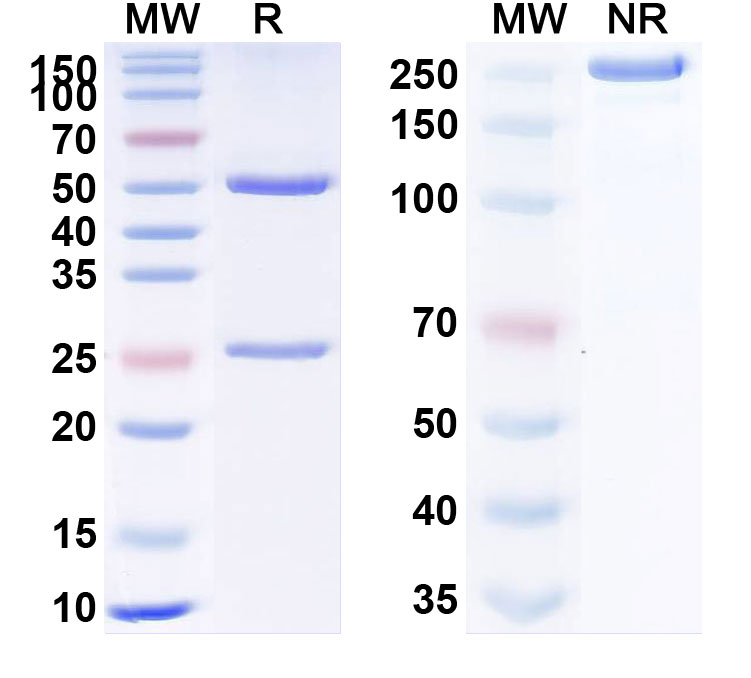 SDS-PAGE
SDS-PAGE for Research Grade Anti-Human TNFa/TNF-alpha (KN002)