

Anti-Human R-Spondin 3 Reference Antibody (Rosmantuzumab, RUO)
- Catalog number: BS10434
- Availability: In Stock
$176.00
- Ex Tax: $176.00
Description: Rosmantuzumab (BS10434) is a research-grade recombinant antibody targeting RSPO3. Produced in mammalian cells with native-like glycosylation.
Highlights:
• Research Grade — For PK/PD studies, assay development, and ADA research.
• Native Glycosylation — Mammalian expression ensures native-like patterns.
Host species: Humanized
Isotype: IgG1-kappa
Species reactivity: Human
Immunogen:
Form: Liquid
Storage instructions:
Storage buffer: 0.01M PBS, pH7.4.
Concentration: 1.72mg/ml
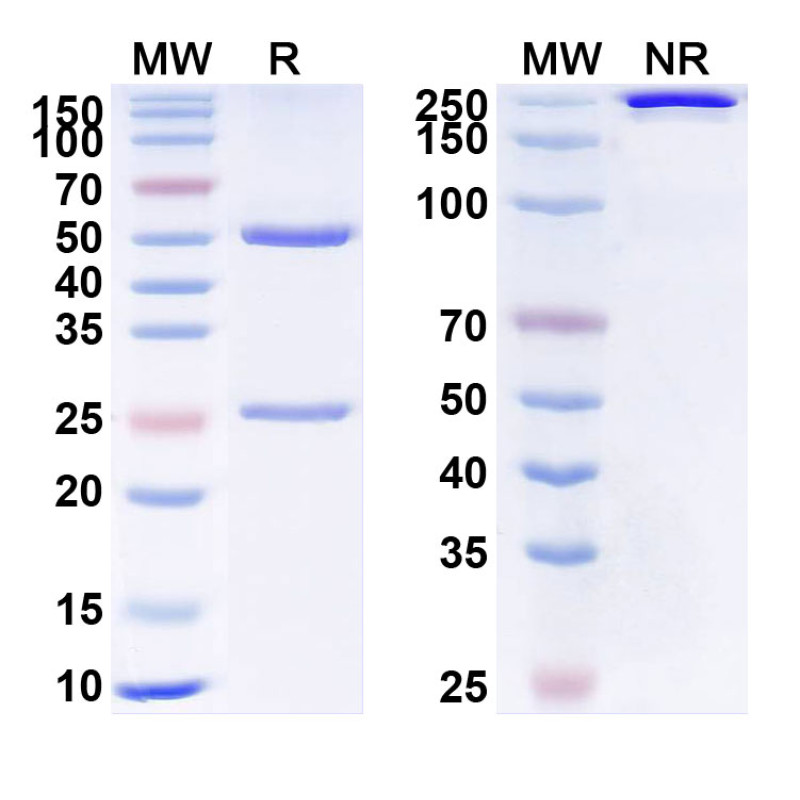
Purity: >95% as determined by SDS-PAGE.
Clonality: Monoclonal
Applications: Research Grade Biosimilar
Target: RSPO3,hPWTSR,hRspo3,PWTSR,R-spondin-3,Thrombospondintype-1domain-containingprotein2,ProteinwithTSPtype-1repeat,Roofplate-specificspondin-3,THSD2
Purification: Protein A/G purified from cell culture supernatant.
Endotoxin level: <1EU/mg, determined by LAL gel clotting assay
Expression system: Mammalian Cells
Stability and Storage: Use a manual defrost freezer and avoid repeated freeze-thaw cycles. Store at 4°C short term (1-2 weeks). Store at -20°C 12 months. Store at -80°C long term.
Alternative Names: OMP-131R10,CAS:1684393-04-1
Background: R-spondin-3 (RSPO3) is a ~30 kDa protein. Activator of the canonical Wnt signaling pathway by acting as a ligand for LGR4-6 receptors, which acts as a key regulator of angiogenesis. Upon binding to LGR4-6 (LGR4, LGR5 or LGR6), LGR4-6 associate with phosphorylated LRP6 and frizzled receptors that are activated by extracellular Wnt receptors, triggering the canonical Wnt signaling pathway to increase expression of target genes. Also regulates the canonical Wnt/beta-catenin-dependent pathway and non-canonical Wnt signaling by acting as an inhibitor of ZNRF3, an important regulator of the Wnt signaling pathway. Acts as a ligand for frizzled FZD8 and LRP6. May negatively regulate the TGF-beta pathway.
References:
1. de Lau, W. et al. (2011) Nature 476, 293-7. PMID: 21727895
2. Glinka, A. et al. (2011) EMBO reports 12, 1055-61. PMID: 21909076
3. Gong, X. et al. (2012) PloS one 7, e37137. PMID: 2261592
4. Szenker-Ravi, E. et al. (2018) Nature 557, 564-569. PMID: 29769720
Note: For research use only. Not suitable for clinical or therapeutic use.
Highlights:
• Research Grade — For PK/PD studies, assay development, and ADA research.
• Native Glycosylation — Mammalian expression ensures native-like patterns.
Host species: Humanized
Isotype: IgG1-kappa
Species reactivity: Human
Immunogen:
Form: Liquid
Storage instructions:
Storage buffer: 0.01M PBS, pH7.4.
Concentration: 1.72mg/ml
Purity: >95% as determined by SDS-PAGE.
Clonality: Monoclonal
Applications: Research Grade Biosimilar
Target: RSPO3,hPWTSR,hRspo3,PWTSR,R-spondin-3,Thrombospondintype-1domain-containingprotein2,ProteinwithTSPtype-1repeat,Roofplate-specificspondin-3,THSD2
Purification: Protein A/G purified from cell culture supernatant.
Endotoxin level: <1EU/mg, determined by LAL gel clotting assay
Expression system: Mammalian Cells
Stability and Storage: Use a manual defrost freezer and avoid repeated freeze-thaw cycles. Store at 4°C short term (1-2 weeks). Store at -20°C 12 months. Store at -80°C long term.
Alternative Names: OMP-131R10,CAS:1684393-04-1
Background: R-spondin-3 (RSPO3) is a ~30 kDa protein. Activator of the canonical Wnt signaling pathway by acting as a ligand for LGR4-6 receptors, which acts as a key regulator of angiogenesis. Upon binding to LGR4-6 (LGR4, LGR5 or LGR6), LGR4-6 associate with phosphorylated LRP6 and frizzled receptors that are activated by extracellular Wnt receptors, triggering the canonical Wnt signaling pathway to increase expression of target genes. Also regulates the canonical Wnt/beta-catenin-dependent pathway and non-canonical Wnt signaling by acting as an inhibitor of ZNRF3, an important regulator of the Wnt signaling pathway. Acts as a ligand for frizzled FZD8 and LRP6. May negatively regulate the TGF-beta pathway.
References:
1. de Lau, W. et al. (2011) Nature 476, 293-7. PMID: 21727895
2. Glinka, A. et al. (2011) EMBO reports 12, 1055-61. PMID: 21909076
3. Gong, X. et al. (2012) PloS one 7, e37137. PMID: 2261592
4. Szenker-Ravi, E. et al. (2018) Nature 557, 564-569. PMID: 29769720
Note: For research use only. Not suitable for clinical or therapeutic use.
Images
-
 Bioactivity
SEC-HPLC detection for Research Grade Rosmantuzumab.
-
 SDS-PAGE
SDS-PAGE for Research Grade Rosmantuzumab.