


Anti-Human Fibroblast activation protein alpha/FAP Reference Antibody (Sibrotuzumab, RUO)
- Catalog number: BS10439
- Availability: In Stock
$176.00
- Ex Tax: $176.00
Description: Sibrotuzumab (BS10439) is a research-grade recombinant antibody targeting Surface-expressed protease. Produced in mammalian cells with native-like glycosylation.
Highlights:
• Research Grade — For PK/PD studies, assay development, and ADA research.
• Native Glycosylation — Mammalian expression ensures native-like patterns.
Host species: Humanized
Isotype: IgG1-kappa
Species reactivity: Human
Immunogen:
Form: Liquid
Storage instructions:
Storage buffer: 0.01M PBS, pH7.4.
Concentration: 2.8mg/ml
Purity: >95% as determined by SDS-PAGE.
Clonality: Monoclonal
Applications: Research Grade Biosimilar
Target: Surface-expressedprotease,GelatinedegradationproteaseFAP,Integralmembraneserineprotease,DipeptidylpeptidaseFAP,Seprase,FAP,Post-prolinecleavingenzyme,APCE,SIMP,FAPalpha,170kDamelanomamembrane-boundgelatinase,Fibroblastactivationproteinalpha,Serineintegralmembraneprotease,ProlylendopeptidaseFAP
Purification: Protein A/G purified from cell culture supernatant.
Endotoxin level: <1EU/mg, determined by LAL gel clotting assay
Expression system: Mammalian Cells
Stability and Storage: Use a manual defrost freezer and avoid repeated freeze-thaw cycles. Store at 4°C short term (1-2 weeks). Store at -20°C 12 months. Store at -80°C long term.
Alternative Names: BIBH1,CAS:216669-97-5
Background: Prolyl endopeptidase FAP (FAPalpha) is a ~87 kDa protein. Cell surface glycoprotein serine protease that participates in extracellular matrix degradation and involved in many cellular processes including tissue remodeling, fibrosis, wound healing, inflammation and tumor growth. Both plasma membrane and soluble forms exhibit post-proline cleaving endopeptidase activity, with a marked preference for Ala/Ser-Gly-Pro-Ser/Asn/Ala consensus sequences, on substrate such as alpha-2-antiplasmin SERPINF2 and SPRY2. Degrade also gelatin, heat-denatured type I collagen, but not native collagen type I and IV, vitronectin, tenascin, laminin, fibronectin, fibrin or casein. Also has dipeptidyl peptidase activity, exhibiting the ability to hydrolyze the prolyl bond two residues from the N-terminus of synthetic dipeptide substrates provided that the penultimate residue is proline, with a preference for Ala-Pro, Ile-Pro, Gly-Pro, Arg-Pro and Pro-Pro. Natural neuropeptide hormones for dipeptidyl peptidase are the neuropeptide Y (NPY), peptide YY (PYY), substance P (TAC1) and brain natriuretic peptide 32 (NPPB).
References:
1. Lee, KN. et al. (2004) Blood 103, 3783-8. PMID: 1475193
2. Lee, KN. et al. (2006) Blood 107, 1397-404. PMID: 16223769
3. Edosada, CY. et al. (2006) The Journal of biological chemistry 281, 7437-44. PMID: 16410248
4. Edosada, CY. et al. (2006) FEBS letters 580, 1581-6. PMID: 16480718
5. Meadows, SA. et al. (2007) Biochemistry 46, 4598-605. PMID: 17381073
6. Aggarwal, S. et al. (2008) Biochemistry 47, 1076-86. PMID: 18095711
7. Huang, CH. et al. (2011) Journal of biochemistry 149, 685-92. PMID: 21288888
8. Keane, FM. et al. (2013) FEBS open bio 4, 43-54. PMID: 24371721
9. Levy, MT. et al. (1999) Hepatology (Baltimore, Md.) 29, 1768-78. PMID: 10347120
10. Mueller, SC. et al. (1999) The Journal of biological chemistry 274, 24947-52. PMID: 10455171
Note: For research use only. Not suitable for clinical or therapeutic use.
Highlights:
• Research Grade — For PK/PD studies, assay development, and ADA research.
• Native Glycosylation — Mammalian expression ensures native-like patterns.
Host species: Humanized
Isotype: IgG1-kappa
Species reactivity: Human
Immunogen:
Form: Liquid
Storage instructions:
Storage buffer: 0.01M PBS, pH7.4.
Concentration: 2.8mg/ml
Purity: >95% as determined by SDS-PAGE.
Clonality: Monoclonal
Applications: Research Grade Biosimilar
Target: Surface-expressedprotease,GelatinedegradationproteaseFAP,Integralmembraneserineprotease,DipeptidylpeptidaseFAP,Seprase,FAP,Post-prolinecleavingenzyme,APCE,SIMP,FAPalpha,170kDamelanomamembrane-boundgelatinase,Fibroblastactivationproteinalpha,Serineintegralmembraneprotease,ProlylendopeptidaseFAP
Purification: Protein A/G purified from cell culture supernatant.
Endotoxin level: <1EU/mg, determined by LAL gel clotting assay
Expression system: Mammalian Cells
Stability and Storage: Use a manual defrost freezer and avoid repeated freeze-thaw cycles. Store at 4°C short term (1-2 weeks). Store at -20°C 12 months. Store at -80°C long term.
Alternative Names: BIBH1,CAS:216669-97-5
Background: Prolyl endopeptidase FAP (FAPalpha) is a ~87 kDa protein. Cell surface glycoprotein serine protease that participates in extracellular matrix degradation and involved in many cellular processes including tissue remodeling, fibrosis, wound healing, inflammation and tumor growth. Both plasma membrane and soluble forms exhibit post-proline cleaving endopeptidase activity, with a marked preference for Ala/Ser-Gly-Pro-Ser/Asn/Ala consensus sequences, on substrate such as alpha-2-antiplasmin SERPINF2 and SPRY2. Degrade also gelatin, heat-denatured type I collagen, but not native collagen type I and IV, vitronectin, tenascin, laminin, fibronectin, fibrin or casein. Also has dipeptidyl peptidase activity, exhibiting the ability to hydrolyze the prolyl bond two residues from the N-terminus of synthetic dipeptide substrates provided that the penultimate residue is proline, with a preference for Ala-Pro, Ile-Pro, Gly-Pro, Arg-Pro and Pro-Pro. Natural neuropeptide hormones for dipeptidyl peptidase are the neuropeptide Y (NPY), peptide YY (PYY), substance P (TAC1) and brain natriuretic peptide 32 (NPPB).
References:
1. Lee, KN. et al. (2004) Blood 103, 3783-8. PMID: 1475193
2. Lee, KN. et al. (2006) Blood 107, 1397-404. PMID: 16223769
3. Edosada, CY. et al. (2006) The Journal of biological chemistry 281, 7437-44. PMID: 16410248
4. Edosada, CY. et al. (2006) FEBS letters 580, 1581-6. PMID: 16480718
5. Meadows, SA. et al. (2007) Biochemistry 46, 4598-605. PMID: 17381073
6. Aggarwal, S. et al. (2008) Biochemistry 47, 1076-86. PMID: 18095711
7. Huang, CH. et al. (2011) Journal of biochemistry 149, 685-92. PMID: 21288888
8. Keane, FM. et al. (2013) FEBS open bio 4, 43-54. PMID: 24371721
9. Levy, MT. et al. (1999) Hepatology (Baltimore, Md.) 29, 1768-78. PMID: 10347120
10. Mueller, SC. et al. (1999) The Journal of biological chemistry 274, 24947-52. PMID: 10455171
Note: For research use only. Not suitable for clinical or therapeutic use.
Images
-
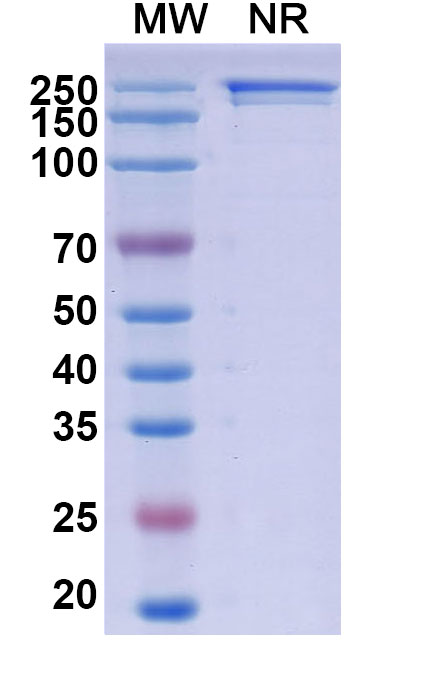 SDS-PAGE
SDS-PAGE for Research Grade Sibrotuzumab.
-
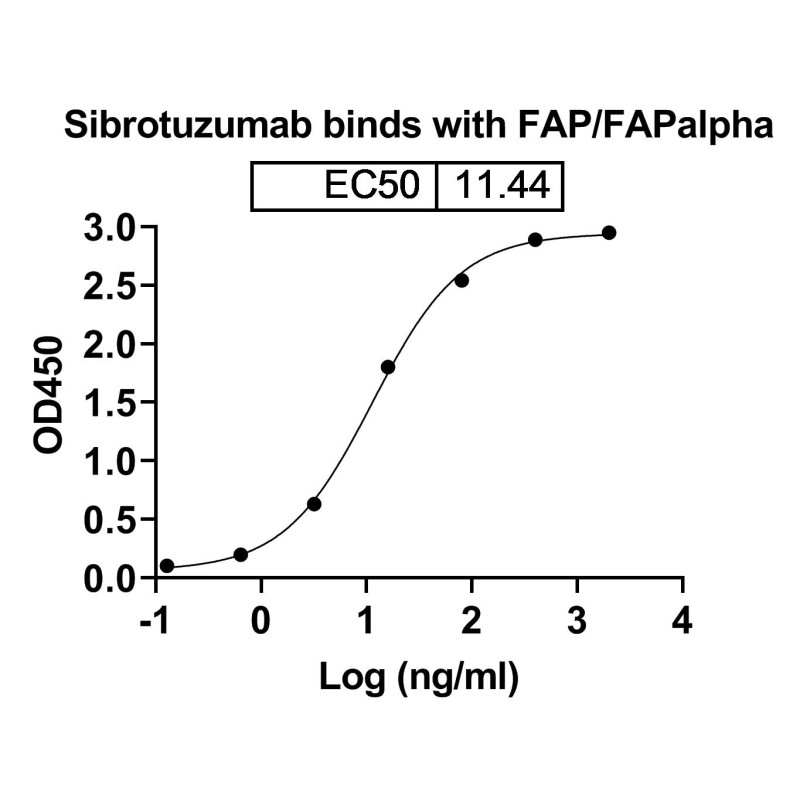
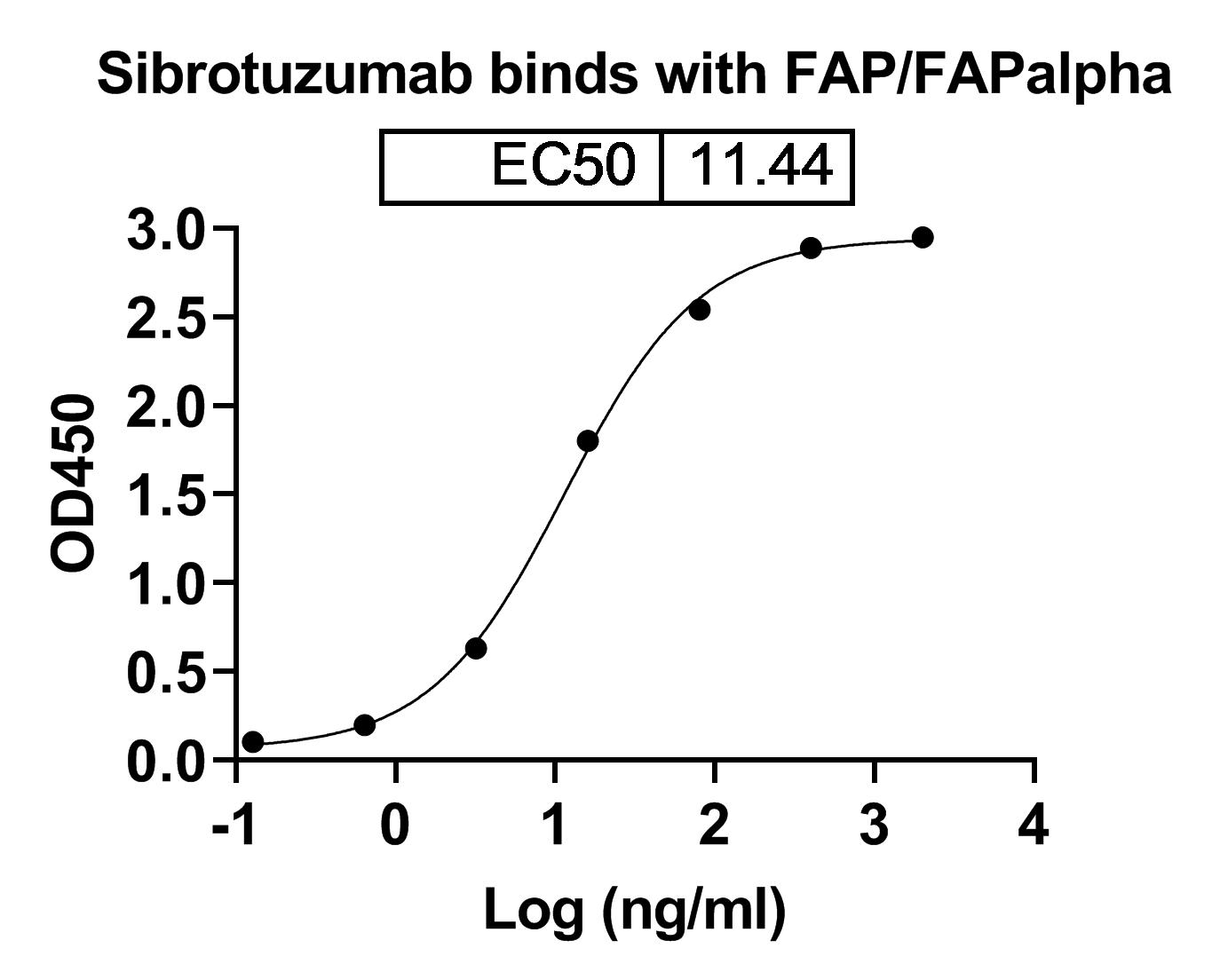 Bioactivity
Detects Human FAP/FAPalpha in indirect ELISAs.
-
 Flow CytoMetry
Flow-cytometry using anti-human FAP antibody. Untransfected cells (blue Histogram) and Transfected cells (Yellow Histogram) were stained with an anti-human FAP monoclonal antibody (Catalog: HC440016) at a concentration of 5 µg/ml for 30 mins at RT. After washing, bound antibody was detected using a Goat Anti-Human IgG H&L Polyclonal Antibody, FITC (abinScience: HF690414) and cells analysed on a NovoCyte Flow Cytometer.
-
 Western blot