
Human METTL3 Recombinant Protein (N-His)
- Catalog number: PH12502
- Availability: In Stock
$211.00
- Ex Tax: $211.00
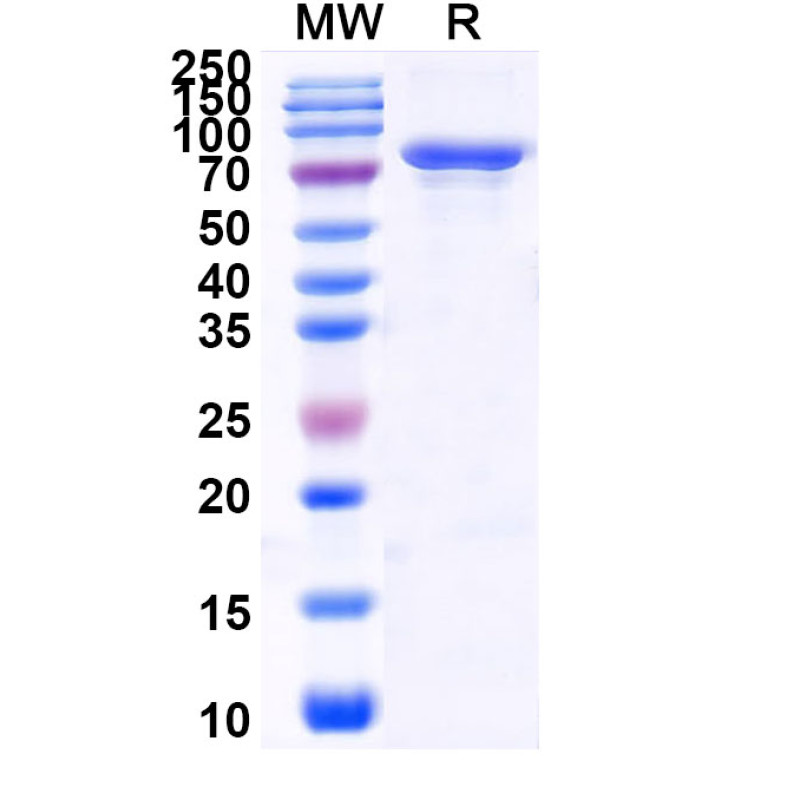
- Description: Recombinant Human METTL3 Protein, N-His (PH12502) expressed in E. coli, spanning Gln357-Leu580. Purity: >90% by SDS-PAGE.
Highlights:
• His-Tagged — N-terminal 6×His tag for IMAC purification.
• E. coli Expression — High-yield, cost-effective production.
• High Purity — >90% purity verified by SDS-PAGE. - Form: Lyophilized
- Storage buffer: Lyophilized from a solution in PBS pH 7.4, 0.02% NLS, 1mM EDTA, 4% Trehalose, 1% Mannitol.
- Purity: >90% as determined by SDS-PAGE.
- Applications: ELISA, Immunogen, SDS-PAGE, WB, Bioactivity testing in progress
- Endotoxin level: Please contact with the lab for this information.
- Expression system: E. coli
- Protein length: Gln357-Leu580
- Predicted molecular weight: 27.88 kDa
- Stability and Storage: Use a manual defrost freezer and avoid repeated freeze thaw cycles. Store at 2 to 8°C for frequent use. Store at -20 to -80°C for twelve months from the date of receipt.
- Reconstitution: Reconstitute in sterile water for a stock solution. A copy of datasheet will be provided with the products, please refer to it for details.
- Alternative Names: METTL3, N6-adenosine-methyltransferase 70 kDa subunit, N6-adenosine-methyltransferase catalytic subunit, MTA70, Methyltransferase-like protein 3, MT-A70, hMETTL3
- Species: Homo sapiens (Human)
- Shipping: In general, proteins are provided as lyophilized powder/frozen liquid. They are shipped out with dry ice/blue ice unless customers require otherwise.
- Background: N(6)-adenosine-methyltransferase catalytic subunit METTL3 is a ~64 kDa protein. The METTL3-METTL14 heterodimer forms a N6-methyltransferase complex that methylates adenosine residues at the N(6) position of some RNAs and regulates various processes such as the circadian clock, differentiation of embryonic and hematopoietic stem cells, cortical neurogenesis, response to DNA damage, differentiation of T-cells and primary miRNA processing. In the heterodimer formed with METTL14, METTL3 constitutes the catalytic core. N6-methyladenosine (m6A), which takes place at the 5'-[AG]GAC-3' consensus sites of some mRNAs, plays a role in mRNA stability, processing, translation efficiency and editing. M6A acts as a key regulator of mRNA stability: methylation is completed upon the release of mRNA into the nucleoplasm and promotes mRNA destabilization and degradation. In embryonic stem cells (ESCs), m6A methylation of mRNAs encoding key naive pluripotency-promoting transcripts results in transcript destabilization, promoting differentiation of ESCs.
References:
1. Dominissini, D. et al. (2012) Nature 485, 201-6. PMID: 2257596
2. Wang, X. et al. (2014) Nature 505, 117-20. PMID: 24284625
3. Liu, N. et al. (2015) Nature 518, 560-4. PMID: 25719671
4. Alarcón, CR. et al. (2015) Nature 519, 482-5. PMID: 25799998
5. Alarcón, CR. et al. (2015) Cell 162, 1299-308. PMID: 2632168
6. Meyer, KD. et al. (2015) Cell 163, 999-1010. PMID: 26593424
7. Wang, X. et al. (2016) Nature 534, 575-8. PMID: 27281194
8. Wang, P. et al. (2016) Molecular cell 63, 306-317. PMID: 273733379. Śledź, P. et al. (2016) eLife 5. PMID: 27627798
9. Xiang, Y. et al. (2017) Nature 543, 573-576. PMID: 28297716 - Note: For research use only.
Images
-
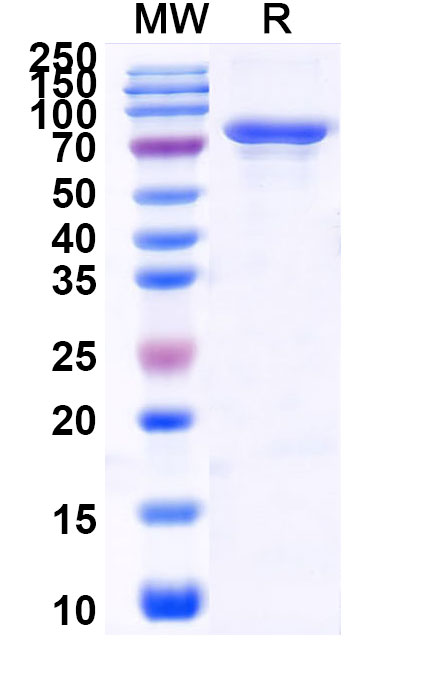 SDS-PAGE
SDS-PAGE for Recombinant Human METTL3 Protein, N-His