

Anti-Human IFN-gamma Reference Antibody (Emapalumab, RUO)
- Catalog number: BS10628
- Availability: In Stock
$176.00
- Ex Tax: $176.00
Description: Emapalumab (BS10628) is a research-grade recombinant antibody targeting Interferon gamma. Produced in mammalian cells with native-like glycosylation.
Highlights:
• Research Grade — For PK/PD studies, assay development, and ADA research.
• Native Glycosylation — Mammalian expression ensures native-like patterns.
Host species: Human
Isotype: IgG1-lambda
Species reactivity: Human
Immunogen:
Form: Liquid
Storage instructions:
Storage buffer: 0.01M PBS, pH7.4.
Concentration: 5mg/ml
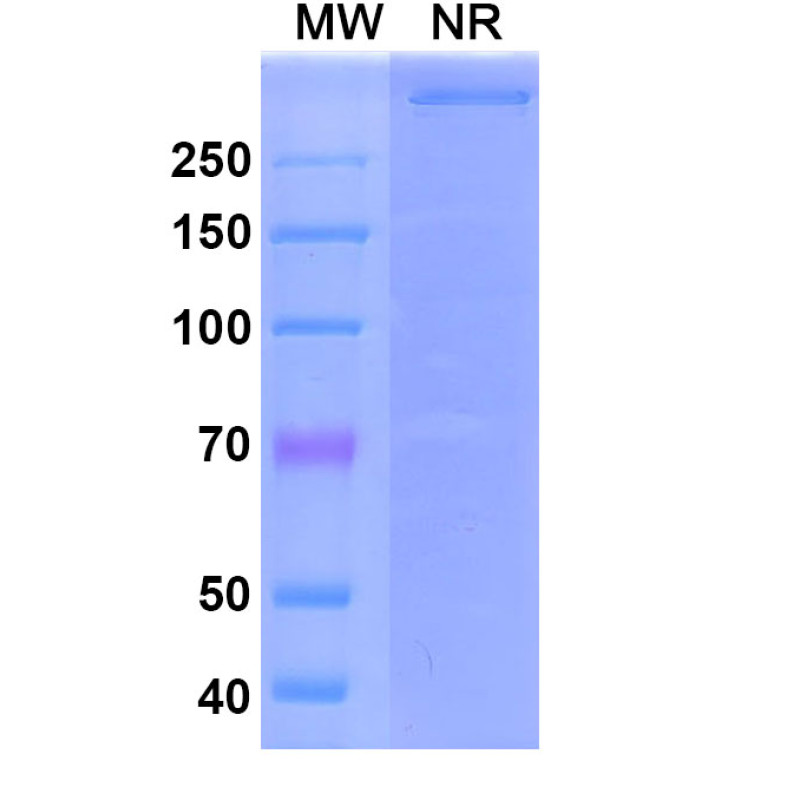
Purity: >95% as determined by SDS-PAGE.
Clonality: Monoclonal
Applications: Research Grade Biosimilar
Target: Interferongamma,IFN-gamma,Immuneinterferon,IFNG
Purification: Protein A/G purified from cell culture supernatant.
Endotoxin level: <1EU/mg, determined by LAL gel clotting assay
Expression system: Mammalian Cells
Stability and Storage: Use a manual defrost freezer and avoid repeated freeze-thaw cycles. Store at 4°C short term (1-2 weeks). Store at -20°C 12 months. Store at -80°C long term.
Alternative Names: NI-0501,emapalumab-lzsg,CAS:1709815-23-5
Background: Interferon gamma (IFNG/IFN-gamma) is a ~19 kDa protein. Type II interferon produced by immune cells such as T-cells and NK cells that plays crucial roles in antimicrobial, antiviral, and antitumor responses by activating effector immune cells and enhancing antigen presentation. Primarily signals through the JAK-STAT pathway after interaction with its receptor IFNGR1 to affect gene regulation. Upon IFNG binding, IFNGR1 intracellular domain opens out to allow association of downstream signaling components JAK2, JAK1 and STAT1, leading to STAT1 activation, nuclear translocation and transcription of IFNG-regulated genes. Many of the induced genes are transcription factors such as IRF1 that are able to further drive regulation of a next wave of transcription. Plays a role in class I antigen presentation pathway by inducing a replacement of catalytic proteasome subunits with immunoproteasome subunits.
References:
1. El Bougrini, J. et al. (2006) Cellular and molecular biology (Noisy-le-Grand, France) 52, 9-15. PMID: 16914093
2. Hisamatsu, H. et al. (1996) The Journal of experimental medicine 183, 1807-16. PMID: 8666937
3. Greenlund, AC. et al. (1993) The Journal of biological chemistry 268, 18103-10. PMID: 8349687
4. Akiyama, K. et al. (1994) FEBS letters 343, 85-8. PMID: 8163024
5. Fabunmi, RP. et al. (2001) Journal of cell science 114, 29-36. PMID: 11112687
6. Lah, TT. et al. (1995) FEBS letters 363, 85-9. PMID: 7729559
Note: For research use only. Not suitable for clinical or therapeutic use.
Highlights:
• Research Grade — For PK/PD studies, assay development, and ADA research.
• Native Glycosylation — Mammalian expression ensures native-like patterns.
Host species: Human
Isotype: IgG1-lambda
Species reactivity: Human
Immunogen:
Form: Liquid
Storage instructions:
Storage buffer: 0.01M PBS, pH7.4.
Concentration: 5mg/ml
Purity: >95% as determined by SDS-PAGE.
Clonality: Monoclonal
Applications: Research Grade Biosimilar
Target: Interferongamma,IFN-gamma,Immuneinterferon,IFNG
Purification: Protein A/G purified from cell culture supernatant.
Endotoxin level: <1EU/mg, determined by LAL gel clotting assay
Expression system: Mammalian Cells
Stability and Storage: Use a manual defrost freezer and avoid repeated freeze-thaw cycles. Store at 4°C short term (1-2 weeks). Store at -20°C 12 months. Store at -80°C long term.
Alternative Names: NI-0501,emapalumab-lzsg,CAS:1709815-23-5
Background: Interferon gamma (IFNG/IFN-gamma) is a ~19 kDa protein. Type II interferon produced by immune cells such as T-cells and NK cells that plays crucial roles in antimicrobial, antiviral, and antitumor responses by activating effector immune cells and enhancing antigen presentation. Primarily signals through the JAK-STAT pathway after interaction with its receptor IFNGR1 to affect gene regulation. Upon IFNG binding, IFNGR1 intracellular domain opens out to allow association of downstream signaling components JAK2, JAK1 and STAT1, leading to STAT1 activation, nuclear translocation and transcription of IFNG-regulated genes. Many of the induced genes are transcription factors such as IRF1 that are able to further drive regulation of a next wave of transcription. Plays a role in class I antigen presentation pathway by inducing a replacement of catalytic proteasome subunits with immunoproteasome subunits.
References:
1. El Bougrini, J. et al. (2006) Cellular and molecular biology (Noisy-le-Grand, France) 52, 9-15. PMID: 16914093
2. Hisamatsu, H. et al. (1996) The Journal of experimental medicine 183, 1807-16. PMID: 8666937
3. Greenlund, AC. et al. (1993) The Journal of biological chemistry 268, 18103-10. PMID: 8349687
4. Akiyama, K. et al. (1994) FEBS letters 343, 85-8. PMID: 8163024
5. Fabunmi, RP. et al. (2001) Journal of cell science 114, 29-36. PMID: 11112687
6. Lah, TT. et al. (1995) FEBS letters 363, 85-9. PMID: 7729559
Note: For research use only. Not suitable for clinical or therapeutic use.
Images
-
 SDS-PAGE
SDS-PAGE for Research Grade Emapalumab.
-
 Western blot
Western blot analysis was performed using anti-IFNG/IFN-gamma monoclonal antibody at 1μg/ml on various samples.
Lane 1: recombinant human IFNG/IFN-gamma (Catalog No: PH10442), 50ng
Lane 2: recombinant human IFNG/IFN-gamma (Catalog No: PH10442), 30ng
Lane 3: recombinant human IFNG/IFN-gamma (Catalog No: PH10442), 20ng