
Anti-Human Proprotein Convertase 9/PCSK9 Reference Antibody (Recaticimab, RUO)
- Catalog number: BS10700
- Availability: In Stock
$326.00
- Ex Tax: $326.00
Description: Recaticimab (BS10700) is a research-grade recombinant antibody targeting Proprotein convertase subtilisin/kexin type 9. Produced in mammalian cells with native-like glycosylation.
Highlights:
• Research Grade — For PK/PD studies, assay development, and ADA research.
• Native Glycosylation — Mammalian expression ensures native-like patterns.
Host species: Humanized
Isotype: IgG1-Kappa
Species reactivity: Human
Immunogen:
Form: Liquid
Storage instructions:
Storage buffer: 0.01M PBS, pH7.4.
Concentration: 1mg/ml
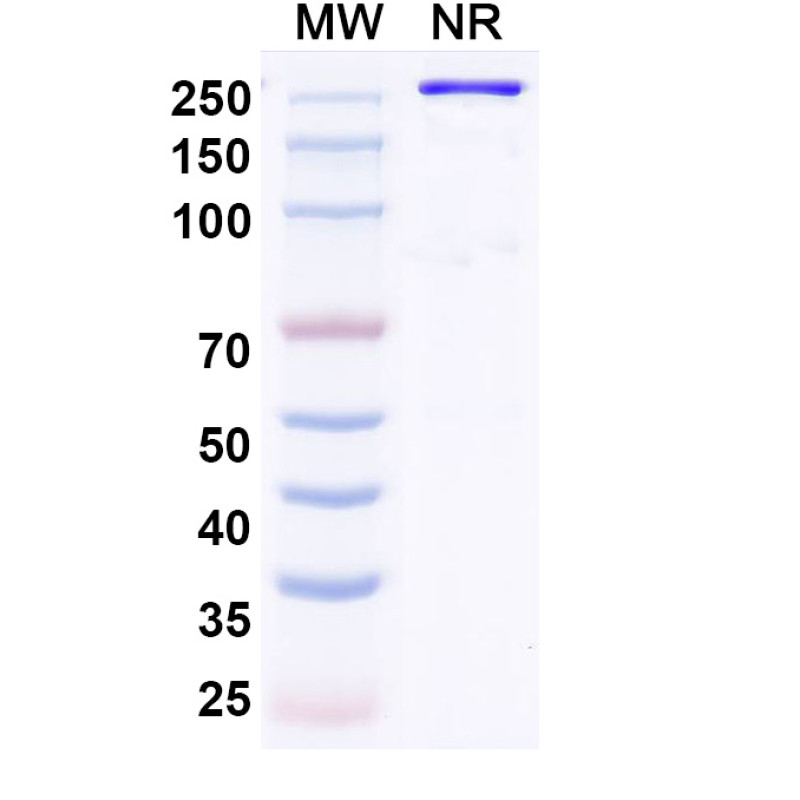
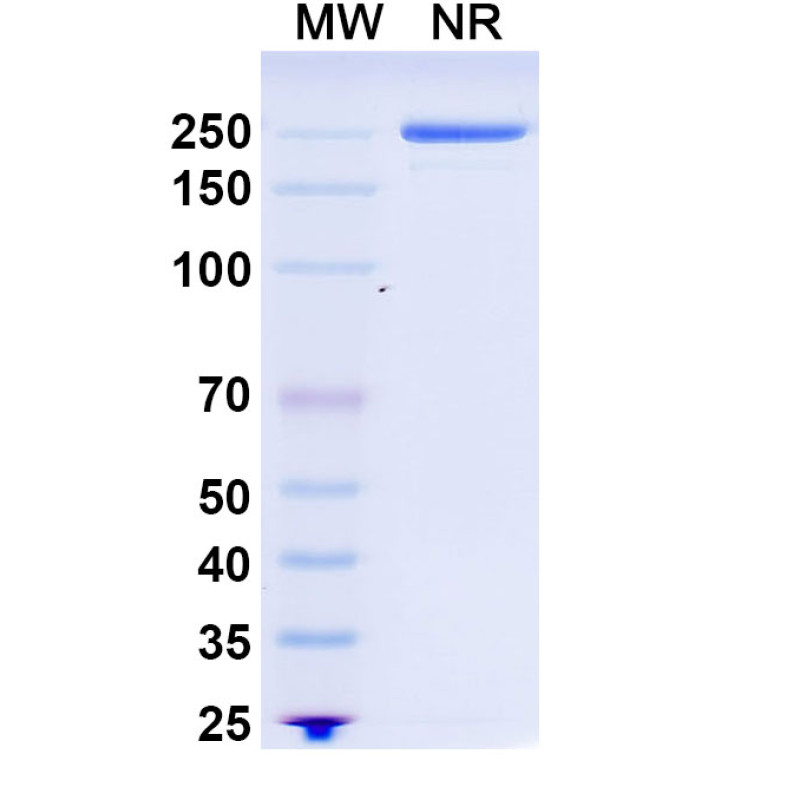
Purity: >95% as determined by SDS-PAGE.
Clonality: Monoclonal
Applications: Research Grade Biosimilar
Target: Proproteinconvertasesubtilisin/kexintype9,Subtilisin/kexin-likeproteasePC9,NARC-1,PC9,Proproteinconvertase9,Neuralapoptosis-regulatedconvertase1,NARC1,PCSK9
Purification: Protein A/G purified from cell culture supernatant.
Endotoxin level: <1EU/mg, determined by LAL gel clotting assay
Expression system: Mammalian Cells
Stability and Storage: Use a manual defrost freezer and avoid repeated freeze-thaw cycles. Store at 4°C short term (1-2 weeks). Store at -20°C 12 months. Store at -80°C long term.
Alternative Names: SHR-1209,CAS:2361290-85-7
Background: Proprotein convertase subtilisin/kexin type 9 (PCSK9) is a ~74 kDa protein. Crucial player in the regulation of plasma cholesterol homeostasis. Binds to low-density lipid receptor family members: low density lipoprotein receptor (LDLR), very low density lipoprotein receptor (VLDLR), apolipoprotein E receptor (LRP1/APOER) and apolipoprotein receptor 2 (LRP8/APOER2), and promotes their degradation in intracellular acidic compartments. Acts via a non-proteolytic mechanism to enhance the degradation of the hepatic LDLR through a clathrin LDLRAP1/ARH-mediated pathway. May prevent the recycling of LDLR from endosomes to the cell surface or direct it to lysosomes for degradation. Can induce ubiquitination of LDLR leading to its subsequent degradation. PCSK9 is the therapeutic target of evolocumab (Repatha).
References:
1. Poirier, S. et al. (2008) The Journal of biological chemistry 283, 2363-72. PMID: 18039658
2. Nassoury, N. et al. (2007) Traffic (Copenhagen, Denmark) 8, 718-32. PMID: 17461796
3. Fan, D. et al. (2008) Biochemistry 47, 1631-9. PMID: 18197702
4. Mayer, G. et al. (2008) The Journal of biological chemistry 283, 31791-801. PMID: 18799458
5. Chen, Y. et al. (2011) Biochemical and biophysical research communications 415, 515-8. PMID: 22074827
6. Jonas, MC. et al. (2008) EMBO reports 9, 916-22. PMID: 18660751
Note: For research use only. Not suitable for clinical or therapeutic use.
Highlights:
• Research Grade — For PK/PD studies, assay development, and ADA research.
• Native Glycosylation — Mammalian expression ensures native-like patterns.
Host species: Humanized
Isotype: IgG1-Kappa
Species reactivity: Human
Immunogen:
Form: Liquid
Storage instructions:
Storage buffer: 0.01M PBS, pH7.4.
Concentration: 1mg/ml
Purity: >95% as determined by SDS-PAGE.
Clonality: Monoclonal
Applications: Research Grade Biosimilar
Target: Proproteinconvertasesubtilisin/kexintype9,Subtilisin/kexin-likeproteasePC9,NARC-1,PC9,Proproteinconvertase9,Neuralapoptosis-regulatedconvertase1,NARC1,PCSK9
Purification: Protein A/G purified from cell culture supernatant.
Endotoxin level: <1EU/mg, determined by LAL gel clotting assay
Expression system: Mammalian Cells
Stability and Storage: Use a manual defrost freezer and avoid repeated freeze-thaw cycles. Store at 4°C short term (1-2 weeks). Store at -20°C 12 months. Store at -80°C long term.
Alternative Names: SHR-1209,CAS:2361290-85-7
Background: Proprotein convertase subtilisin/kexin type 9 (PCSK9) is a ~74 kDa protein. Crucial player in the regulation of plasma cholesterol homeostasis. Binds to low-density lipid receptor family members: low density lipoprotein receptor (LDLR), very low density lipoprotein receptor (VLDLR), apolipoprotein E receptor (LRP1/APOER) and apolipoprotein receptor 2 (LRP8/APOER2), and promotes their degradation in intracellular acidic compartments. Acts via a non-proteolytic mechanism to enhance the degradation of the hepatic LDLR through a clathrin LDLRAP1/ARH-mediated pathway. May prevent the recycling of LDLR from endosomes to the cell surface or direct it to lysosomes for degradation. Can induce ubiquitination of LDLR leading to its subsequent degradation. PCSK9 is the therapeutic target of evolocumab (Repatha).
References:
1. Poirier, S. et al. (2008) The Journal of biological chemistry 283, 2363-72. PMID: 18039658
2. Nassoury, N. et al. (2007) Traffic (Copenhagen, Denmark) 8, 718-32. PMID: 17461796
3. Fan, D. et al. (2008) Biochemistry 47, 1631-9. PMID: 18197702
4. Mayer, G. et al. (2008) The Journal of biological chemistry 283, 31791-801. PMID: 18799458
5. Chen, Y. et al. (2011) Biochemical and biophysical research communications 415, 515-8. PMID: 22074827
6. Jonas, MC. et al. (2008) EMBO reports 9, 916-22. PMID: 18660751
Note: For research use only. Not suitable for clinical or therapeutic use.
Images
-
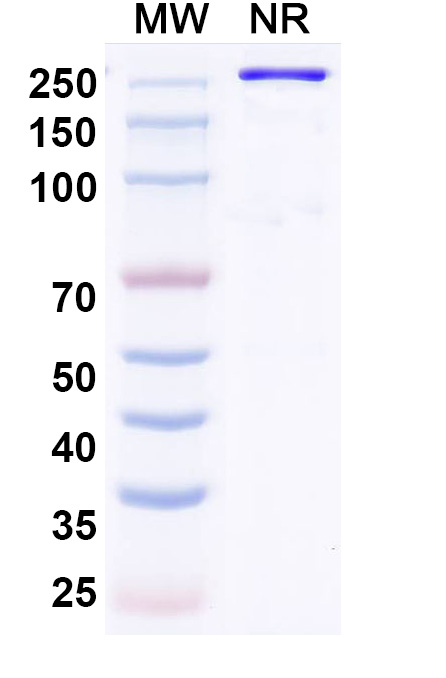 SDS-PAGE
SDS-PAGE for Research Grade Recaticimab.