
Anti-Human GDF-15 Reference Antibody (Ponsegromab, RUO)
- Catalog number: BS10726
- Availability: In Stock
$176.00
- Ex Tax: $176.00
Description: Ponsegromab (BS10726) is a research-grade recombinant antibody targeting PLAB. Produced in mammalian cells with native-like glycosylation.
Highlights:
• Research Grade — For PK/PD studies, assay development, and ADA research.
• Native Glycosylation — Mammalian expression ensures native-like patterns.
Host species: Humanized
Isotype: IgG1-Kappa
Species reactivity: Human
Immunogen:
Form: Liquid
Storage instructions:
Storage buffer: 0.01M PBS, pH7.4.
Concentration: 1mg/ml
Purity: >95% as determined by SDS-PAGE.
Clonality: Monoclonal
Applications: Research Grade Biosimilar
Target: PLAB,Placentalbonemorphogeneticprotein,MIC1,NRG-1,PTGFB,NSAID-regulatedgene1protein,GDF15,NAG-1,MIC-1,Prostatedifferentiationfactor,NSAID-activatedgene1protein,Growth/differentiationfactor15,Macrophageinhibitorycytokine1,PlacentalTGF-beta,GDF-15,PDF
Purification: Protein A/G purified from cell culture supernatant.
Endotoxin level: <1EU/mg, determined by LAL gel clotting assay
Expression system: Mammalian Cells
Stability and Storage: Use a manual defrost freezer and avoid repeated freeze-thaw cycles. Store at 4°C short term (1-2 weeks). Store at -20°C 12 months. Store at -80°C long term.
Alternative Names: PF-06946860,CAS:2368950-15-4
Background: Growth/differentiation factor 15 (GDF15/MIC1) is a ~34 kDa protein. Hormone produced in response to various stresses to confer information about those stresses to the brain, and trigger an aversive response, characterized by nausea, vomiting, and/or loss of appetite. The aversive response is both required to reduce continuing exposure to those stresses at the time of exposure and to promote avoidance behavior in the future. Acts by binding to its receptor, GFRAL, activating GFRAL-expressing neurons localized in the area postrema and nucleus tractus solitarius of the brainstem. It then triggers the activation of neurons localized within the parabrachial nucleus and central amygdala, which constitutes part of the 'emergency circuit' that shapes responses to stressful conditions. The GDF15-GFRAL signal induces expression of genes involved in metabolism, such as lipid metabolism in adipose tissues.
References:
1. Tsai, VW. et al. (2013) PloS one 8, e55174. PMID: 23468844
2. Tsai, VW. et al. (2014) PloS one 9, e100370. PMID: 24971956
3. Mullican, SE. et al. (2017) Nature medicine 23, 1150-1157. PMID: 28846097
4. Emmerson, PJ. et al. (2017) Nature medicine 23, 1215-1219. PMID: 28846098
5. Yang, L. et al. (2017) Nature medicine 23, 1158-1166. PMID: 28846099
6. Hsu, JY. et al. (2017) Nature 550, 255-259. PMID: 28953886
7. Xiong, Y. et al. (2017) Science translational medicine 9. PMID: 29046435
8. Patel, S. et al. (2019) Cell metabolism 29, 707-718.e8. PMID: 30639358
9. Coll, AP. et al. (2020) Nature 578, 444-448. PMID: 31875646
10. Klein, AB. et al. (2021) Nature communications 12, 1041. PMID: 33589633
Note: For research use only. Not suitable for clinical or therapeutic use.
Highlights:
• Research Grade — For PK/PD studies, assay development, and ADA research.
• Native Glycosylation — Mammalian expression ensures native-like patterns.
Host species: Humanized
Isotype: IgG1-Kappa
Species reactivity: Human
Immunogen:
Form: Liquid
Storage instructions:
Storage buffer: 0.01M PBS, pH7.4.
Concentration: 1mg/ml
Purity: >95% as determined by SDS-PAGE.
Clonality: Monoclonal
Applications: Research Grade Biosimilar
Target: PLAB,Placentalbonemorphogeneticprotein,MIC1,NRG-1,PTGFB,NSAID-regulatedgene1protein,GDF15,NAG-1,MIC-1,Prostatedifferentiationfactor,NSAID-activatedgene1protein,Growth/differentiationfactor15,Macrophageinhibitorycytokine1,PlacentalTGF-beta,GDF-15,PDF
Purification: Protein A/G purified from cell culture supernatant.
Endotoxin level: <1EU/mg, determined by LAL gel clotting assay
Expression system: Mammalian Cells
Stability and Storage: Use a manual defrost freezer and avoid repeated freeze-thaw cycles. Store at 4°C short term (1-2 weeks). Store at -20°C 12 months. Store at -80°C long term.
Alternative Names: PF-06946860,CAS:2368950-15-4
Background: Growth/differentiation factor 15 (GDF15/MIC1) is a ~34 kDa protein. Hormone produced in response to various stresses to confer information about those stresses to the brain, and trigger an aversive response, characterized by nausea, vomiting, and/or loss of appetite. The aversive response is both required to reduce continuing exposure to those stresses at the time of exposure and to promote avoidance behavior in the future. Acts by binding to its receptor, GFRAL, activating GFRAL-expressing neurons localized in the area postrema and nucleus tractus solitarius of the brainstem. It then triggers the activation of neurons localized within the parabrachial nucleus and central amygdala, which constitutes part of the 'emergency circuit' that shapes responses to stressful conditions. The GDF15-GFRAL signal induces expression of genes involved in metabolism, such as lipid metabolism in adipose tissues.
References:
1. Tsai, VW. et al. (2013) PloS one 8, e55174. PMID: 23468844
2. Tsai, VW. et al. (2014) PloS one 9, e100370. PMID: 24971956
3. Mullican, SE. et al. (2017) Nature medicine 23, 1150-1157. PMID: 28846097
4. Emmerson, PJ. et al. (2017) Nature medicine 23, 1215-1219. PMID: 28846098
5. Yang, L. et al. (2017) Nature medicine 23, 1158-1166. PMID: 28846099
6. Hsu, JY. et al. (2017) Nature 550, 255-259. PMID: 28953886
7. Xiong, Y. et al. (2017) Science translational medicine 9. PMID: 29046435
8. Patel, S. et al. (2019) Cell metabolism 29, 707-718.e8. PMID: 30639358
9. Coll, AP. et al. (2020) Nature 578, 444-448. PMID: 31875646
10. Klein, AB. et al. (2021) Nature communications 12, 1041. PMID: 33589633
Note: For research use only. Not suitable for clinical or therapeutic use.
Images
-
 Bioactivity
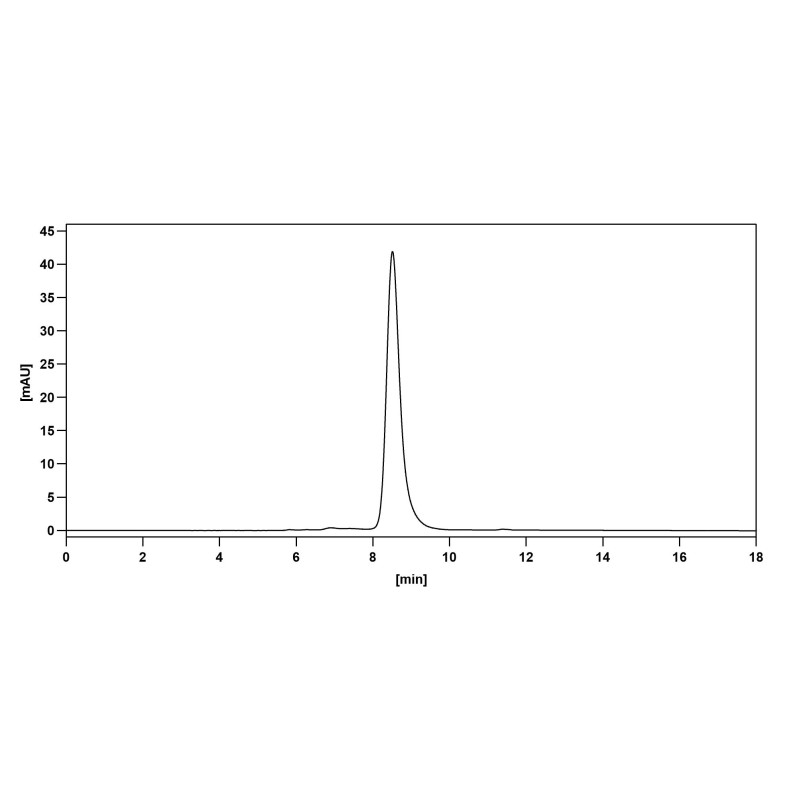
SEC-HPLC detection for Research Grade Ponsegromab.