
Human SLC10A1 Recombinant Protein (N-His-SUMO)
- Catalog number: PH15365
- Availability: In Stock
$211.00
- Ex Tax: $211.00
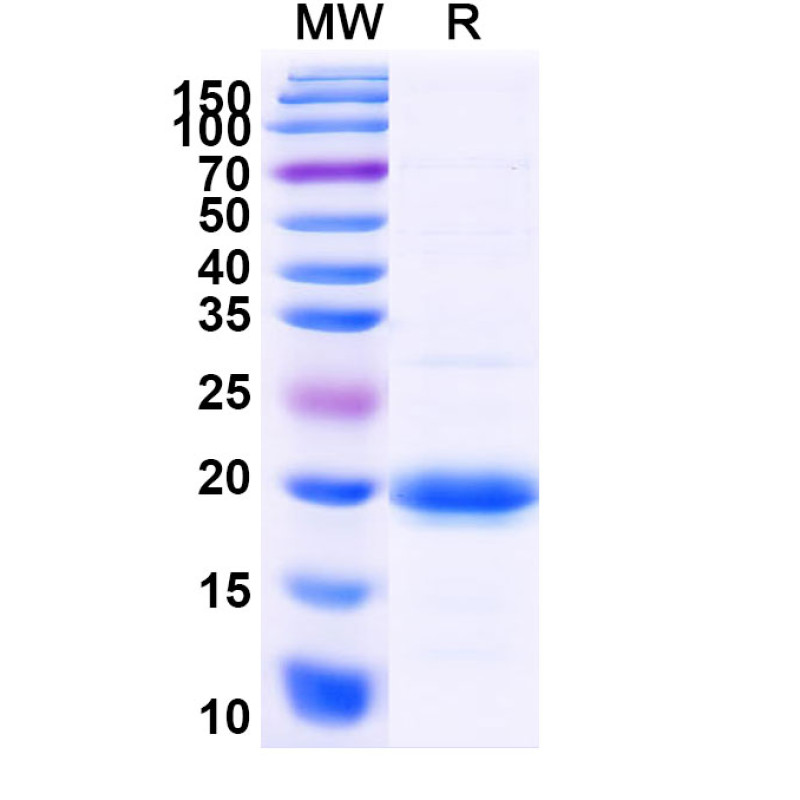
- Description: Recombinant Human SLC10A1 Protein, N-His-SUMO (PH15365) expressed in E. coli, spanning Phe244-Phe284. Purity: >90% by SDS-PAGE.
Highlights:
• His-Tagged — N-terminal 6×His tag for IMAC purification.
• E. coli Expression — High-yield, cost-effective production.
• High Purity — >90% purity verified by SDS-PAGE. - Form: Lyophilized
- Storage buffer: Lyophilized from a solution in PBS pH 7.4, 0.02% NLS, 1mM EDTA, 4% Trehalose, 1% Mannitol.
- Purity: >90% as determined by SDS-PAGE.
- Applications: ELISA, Immunogen, SDS-PAGE, WB, Bioactivity testing in progress
- Endotoxin level: Please contact with the lab for this information.
- Expression system: E. coli
- Protein length: Phe244-Phe284
- Predicted molecular weight: 17 kDa
- Stability and Storage: Use a manual defrost freezer and avoid repeated freeze thaw cycles. Store at 2 to 8°C for frequent use. Store at -20 to -80°C for twelve months from the date of receipt.
- Reconstitution: Reconstitute in sterile water for a stock solution. A copy of datasheet will be provided with the products, please refer to it for details.
- Alternative Names: Cell growth-inhibiting gene 29 protein, Sodium/taurocholate cotransporting polypeptide, NTCP, SLC10A1, Sodium/bile acid cotransporter, Na(+)/taurocholate transport protein, Solute carrier family 10 member 1, Na(+)/bile acid cotransporter
- Species: Homo sapiens (Human)
- Shipping: In general, proteins are provided as lyophilized powder/frozen liquid. They are shipped out with dry ice/blue ice unless customers require otherwise.
- Background: Hepatic sodium/bile acid cotransporter (SLC10A1) is a ~38 kDa protein. As a major transporter of conjugated bile salts from plasma into the hepatocyte, it plays a key role in the enterohepatic circulation of bile salts necessary for the solubilization and absorption of dietary fat and fat-soluble vitamins. It is strictly dependent on the extracellular presence of sodium. It exhibits broad substrate specificity and transports various bile acids, such as taurocholate, cholate, as well as non-bile acid organic compounds, such as estrone sulfate. Works collaboratively with the ileal transporter (NTCP2), the organic solute transporter (OST), and the bile salt export pump (BSEP), to ensure efficacious biological recycling of bile acids during enterohepatic circulation.
References:
1. Ho, RH. et al. (2004) The Journal of biological chemistry 279, 7213-22. PMID: 14660639
2. Vaz, FM. et al. (2015) Hepatology (Baltimore, Md.) 61, 260-7. PMID: 24867799
3. Floerl, S. et al. (2021) SLAS discovery : advancing life sciences R & D 26, 1055-1064. PMID: 34060352
4. Hagenbuch, B. et al. (1994) The Journal of clinical investigation 93, 1326-31. PMID: 8132774
5. Kunst, RF. et al. (2021) Hepatology (Baltimore, Md.) 73, 2577-2585. PMID: 33222321 - Note: For research use only.
Images
-
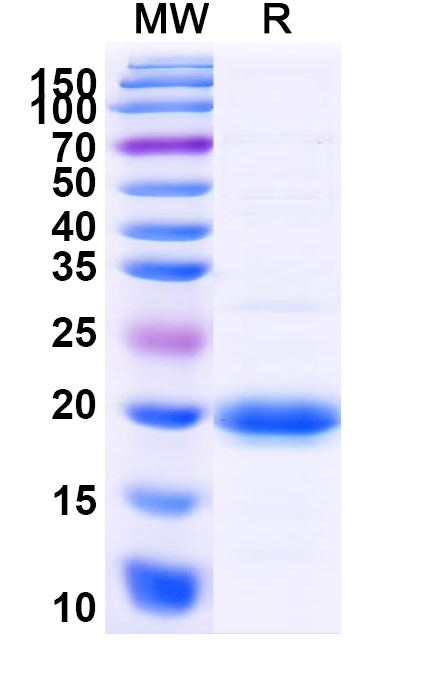 SDS-PAGE
SDS-PAGE for Recombinant Human SLC10A1 Protein, N-His-SUMO