
Anti-Human CD156b/ADAM17 Reference Antibody (D8P1C1)
- Catalog number: BS10935
- Availability: In Stock
$370.00
- Ex Tax: $370.00
Description: Anti-Human CD156b/ADAM17 (D8P1C1) (BS10935) is a research-grade recombinant antibody targeting CD156. Produced in mammalian cells with native-like glycosylation.
Highlights:
• Research Grade — For PK/PD studies, assay development, and ADA research.
• Native Glycosylation — Mammalian expression ensures native-like patterns.
Host species: Human
Isotype: IgG1-lambda
Species reactivity: Human
Immunogen:
Form: Liquid
Storage instructions:
Storage buffer: 0.01M PBS, pH7.4.
Concentration: 0.11mg/ml
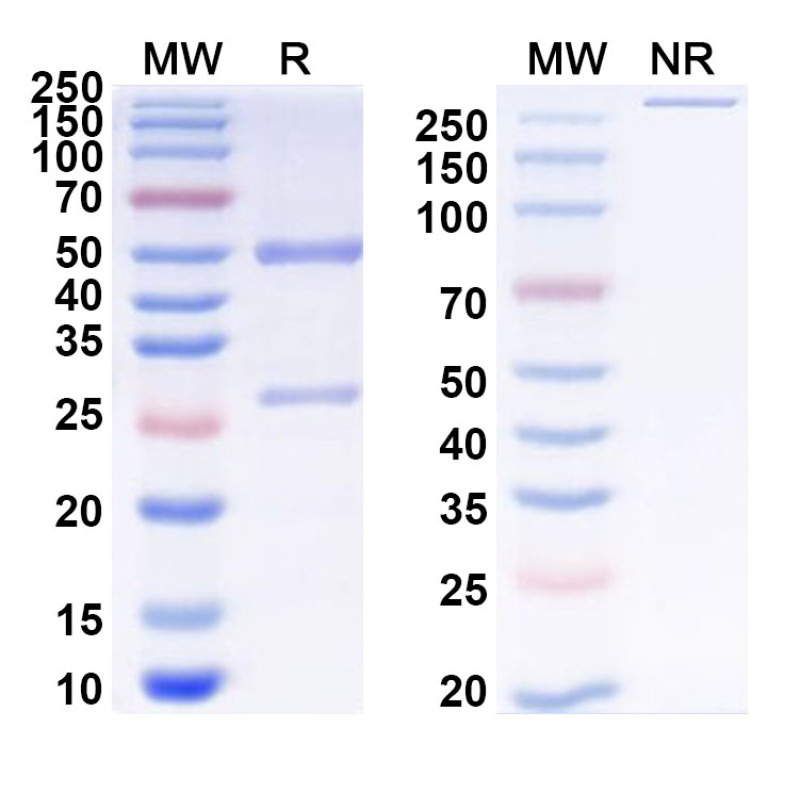
Purity: >95% as determined by SDS-PAGE.
Clonality: Monoclonal
Applications: Research Grade Biosimilar
Target: TACE,Snakevenom-likeprotease,ADAM17,CD156b,CSVP,ADAM17,Disintegrinandmetalloproteinasedomain-containingprotein17,TNF-alphaconvertase,TNF-alpha-convertingenzyme
Purification: Protein A/G purified from cell culture supernatant.
Endotoxin level: <1EU/mg, determined by LAL gel clotting assay
Expression system: Mammalian Cells
Stability and Storage: Use a manual defrost freezer and avoid repeated freeze-thaw cycles. Store at 4°C short term (1-2 weeks). Store at -20°C 12 months. Store at -80°C long term.
Alternative Names: D8P1C1
Background: Disintegrin and metalloproteinase domain-containing protein 17 (CD156b/ADAM17) is a ~93 kDa protein. Transmembrane metalloprotease which mediates the ectodomain shedding of a myriad of transmembrane proteins including adhesion proteins, growth factor precursors and cytokines important for inflammation and immunity. Cleaves the membrane-bound precursor of TNF to its mature soluble form. Responsible for the proteolytical release of soluble JAM3 from endothelial cells surface. Responsible for the proteolytic release of several other cell-surface proteins, including p75 TNF-receptor, interleukin 1 receptor type II, p55 TNF-receptor, transforming growth factor-alpha, L-selectin, growth hormone receptor, MUC1 and the amyloid precursor protein. Acts as an activator of Notch pathway by mediating cleavage of Notch, generating the membrane-associated intermediate fragment called Notch extracellular truncation (NEXT).
References:
1. Boskovski, MT. et al. (2013) Nature 504, 456-9. PMID: 24226769
2. Heurich, A. et al. (2014) Journal of virology 88, 1293-307. PMID: 24227843
3. Riethmueller, S. et al. (2017) PLoS biology 15, e2000080. PMID: 2806082
4. Feuerbach, D. et al. (2017) Neuroscience letters 660, 109-114. PMID: 28923481
5. Müller, M. et al. (2022) Cells 11. PMID: 36078095
6. Moss, ML. et al. (1997) Nature 385, 733-6. PMID: 9034191
7. Rabquer, BJ. et al. (2010) Journal of immunology (Baltimore, Md. : 1950) 185, 1777-85. PMID: 20592283
8. Thathiah, A. et al. (2003) The Journal of biological chemistry 278, 3386-94. PMID: 12441351
Note: For research use only. Not suitable for clinical or therapeutic use.
Highlights:
• Research Grade — For PK/PD studies, assay development, and ADA research.
• Native Glycosylation — Mammalian expression ensures native-like patterns.
Host species: Human
Isotype: IgG1-lambda
Species reactivity: Human
Immunogen:
Form: Liquid
Storage instructions:
Storage buffer: 0.01M PBS, pH7.4.
Concentration: 0.11mg/ml
Purity: >95% as determined by SDS-PAGE.
Clonality: Monoclonal
Applications: Research Grade Biosimilar
Target: TACE,Snakevenom-likeprotease,ADAM17,CD156b,CSVP,ADAM17,Disintegrinandmetalloproteinasedomain-containingprotein17,TNF-alphaconvertase,TNF-alpha-convertingenzyme
Purification: Protein A/G purified from cell culture supernatant.
Endotoxin level: <1EU/mg, determined by LAL gel clotting assay
Expression system: Mammalian Cells
Stability and Storage: Use a manual defrost freezer and avoid repeated freeze-thaw cycles. Store at 4°C short term (1-2 weeks). Store at -20°C 12 months. Store at -80°C long term.
Alternative Names: D8P1C1
Background: Disintegrin and metalloproteinase domain-containing protein 17 (CD156b/ADAM17) is a ~93 kDa protein. Transmembrane metalloprotease which mediates the ectodomain shedding of a myriad of transmembrane proteins including adhesion proteins, growth factor precursors and cytokines important for inflammation and immunity. Cleaves the membrane-bound precursor of TNF to its mature soluble form. Responsible for the proteolytical release of soluble JAM3 from endothelial cells surface. Responsible for the proteolytic release of several other cell-surface proteins, including p75 TNF-receptor, interleukin 1 receptor type II, p55 TNF-receptor, transforming growth factor-alpha, L-selectin, growth hormone receptor, MUC1 and the amyloid precursor protein. Acts as an activator of Notch pathway by mediating cleavage of Notch, generating the membrane-associated intermediate fragment called Notch extracellular truncation (NEXT).
References:
1. Boskovski, MT. et al. (2013) Nature 504, 456-9. PMID: 24226769
2. Heurich, A. et al. (2014) Journal of virology 88, 1293-307. PMID: 24227843
3. Riethmueller, S. et al. (2017) PLoS biology 15, e2000080. PMID: 2806082
4. Feuerbach, D. et al. (2017) Neuroscience letters 660, 109-114. PMID: 28923481
5. Müller, M. et al. (2022) Cells 11. PMID: 36078095
6. Moss, ML. et al. (1997) Nature 385, 733-6. PMID: 9034191
7. Rabquer, BJ. et al. (2010) Journal of immunology (Baltimore, Md. : 1950) 185, 1777-85. PMID: 20592283
8. Thathiah, A. et al. (2003) The Journal of biological chemistry 278, 3386-94. PMID: 12441351
Note: For research use only. Not suitable for clinical or therapeutic use.
Images
-
 Bioactivity
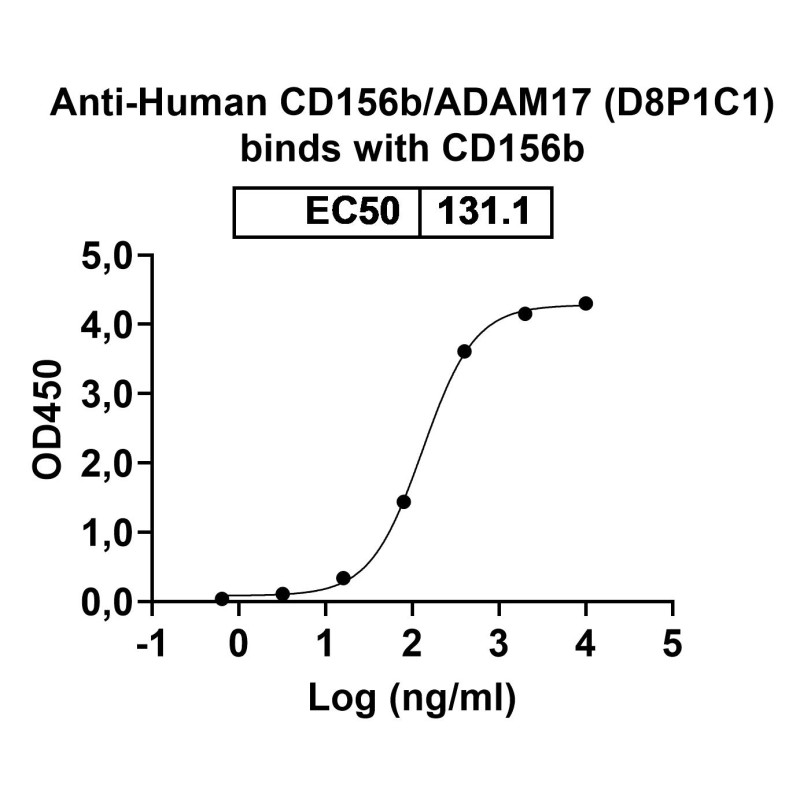
Detects recombinant human ADAM17 (Cat No.: PH11940) in indirect ELISA.
-
 SDS-PAGE
SDS-PAGE for Research Grade Anti-Human CD156b/ADAM17 (D8P1C1).