
Anti-Human CD246/ALK Reference Antibody (DLX521)
- Catalog number: BS10942
- Availability: In Stock
$370.00
- Ex Tax: $370.00
Description: Anti-Human CD246/ALK (DLX521) (BS10942) is a research-grade recombinant antibody targeting CD246. Produced in mammalian cells with native-like glycosylation.
Highlights:
• Research Grade — For PK/PD studies, assay development, and ADA research.
• Native Glycosylation — Mammalian expression ensures native-like patterns.
Host species: Human
Isotype: IgG
Species reactivity: Human
Immunogen:
Form: Liquid
Storage instructions:
Storage buffer: 0.01M PBS, pH7.4.
Concentration: 1mg/ml
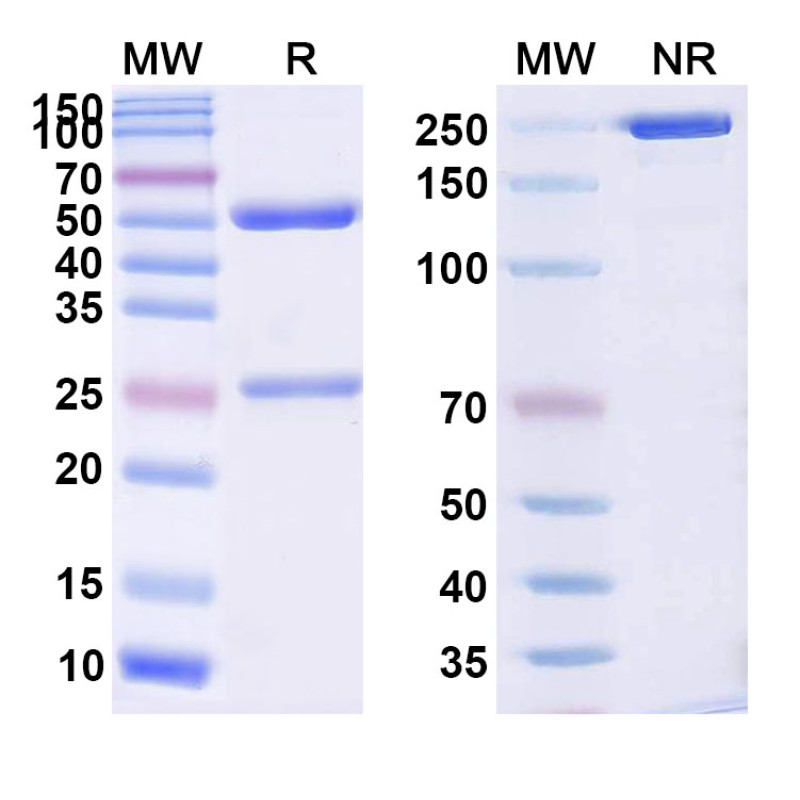
Purity: >95% as determined by SDS-PAGE.
Clonality: Monoclonal
Applications: Research Grade Biosimilar
Target: ALK,ALKtyrosinekinasereceptor,CD246,Anaplasticlymphomakinase
Purification: Protein A/G purified from cell culture supernatant.
Endotoxin level: <1EU/mg, determined by LAL gel clotting assay
Expression system: Mammalian Cells
Stability and Storage: Use a manual defrost freezer and avoid repeated freeze-thaw cycles. Store at 4°C short term (1-2 weeks). Store at -20°C 12 months. Store at -80°C long term.
Alternative Names: DLX521
Background: ALK tyrosine kinase receptor (CD246) is a ~176 kDa protein. Neuronal receptor tyrosine kinase that is essentially and transiently expressed in specific regions of the central and peripheral nervous systems and plays an important role in the genesis and differentiation of the nervous system. Also acts as a key thinness protein involved in the resistance to weight gain: in hypothalamic neurons, controls energy expenditure acting as a negative regulator of white adipose tissue lipolysis and sympathetic tone to fine-tune energy homeostasis. Following activation by ALKAL2 ligand at the cell surface, transduces an extracellular signal into an intracellular response. In contrast, ALKAL1 is not a potent physiological ligand for ALK. Ligand-binding to the extracellular domain induces tyrosine kinase activation, leading to activation of the mitogen-activated protein kinase (MAPK) pathway.
References:
1. Souttou, B. et al. (2001) The Journal of biological chemistry 276, 9526-31. PMID: 11121404
2. Simonitsch, I. et al. (2001) FASEB journal : official publication of the Federation of American Societies for Experimental Biology 15, 1416-8. PMID: 11387242
3. Gouzi, JY. et al. (2005) Journal of cell science 118, 5811-23. PMID: 16317043
4. Degoutin, J. et al. (2007) FEBS letters 581, 727-34. PMID: 17274988
5. Reshetnyak, AV. et al. (2018) Proceedings of the National Academy of Sciences of the United States of America 115, 8340-8345. PMID: 30061385
6. De Munck, S. et al. (2021) Nature 600, 143-147. PMID: 34646012
7. Reshetnyak, AV. et al. (2021) Nature 600, 153-157. PMID: 34819673
8. Borenäs, M. et al. (2021) The EMBO journal 40, e105784. PMID: 33411331
Note: For research use only. Not suitable for clinical or therapeutic use.
Highlights:
• Research Grade — For PK/PD studies, assay development, and ADA research.
• Native Glycosylation — Mammalian expression ensures native-like patterns.
Host species: Human
Isotype: IgG
Species reactivity: Human
Immunogen:
Form: Liquid
Storage instructions:
Storage buffer: 0.01M PBS, pH7.4.
Concentration: 1mg/ml
Purity: >95% as determined by SDS-PAGE.
Clonality: Monoclonal
Applications: Research Grade Biosimilar
Target: ALK,ALKtyrosinekinasereceptor,CD246,Anaplasticlymphomakinase
Purification: Protein A/G purified from cell culture supernatant.
Endotoxin level: <1EU/mg, determined by LAL gel clotting assay
Expression system: Mammalian Cells
Stability and Storage: Use a manual defrost freezer and avoid repeated freeze-thaw cycles. Store at 4°C short term (1-2 weeks). Store at -20°C 12 months. Store at -80°C long term.
Alternative Names: DLX521
Background: ALK tyrosine kinase receptor (CD246) is a ~176 kDa protein. Neuronal receptor tyrosine kinase that is essentially and transiently expressed in specific regions of the central and peripheral nervous systems and plays an important role in the genesis and differentiation of the nervous system. Also acts as a key thinness protein involved in the resistance to weight gain: in hypothalamic neurons, controls energy expenditure acting as a negative regulator of white adipose tissue lipolysis and sympathetic tone to fine-tune energy homeostasis. Following activation by ALKAL2 ligand at the cell surface, transduces an extracellular signal into an intracellular response. In contrast, ALKAL1 is not a potent physiological ligand for ALK. Ligand-binding to the extracellular domain induces tyrosine kinase activation, leading to activation of the mitogen-activated protein kinase (MAPK) pathway.
References:
1. Souttou, B. et al. (2001) The Journal of biological chemistry 276, 9526-31. PMID: 11121404
2. Simonitsch, I. et al. (2001) FASEB journal : official publication of the Federation of American Societies for Experimental Biology 15, 1416-8. PMID: 11387242
3. Gouzi, JY. et al. (2005) Journal of cell science 118, 5811-23. PMID: 16317043
4. Degoutin, J. et al. (2007) FEBS letters 581, 727-34. PMID: 17274988
5. Reshetnyak, AV. et al. (2018) Proceedings of the National Academy of Sciences of the United States of America 115, 8340-8345. PMID: 30061385
6. De Munck, S. et al. (2021) Nature 600, 143-147. PMID: 34646012
7. Reshetnyak, AV. et al. (2021) Nature 600, 153-157. PMID: 34819673
8. Borenäs, M. et al. (2021) The EMBO journal 40, e105784. PMID: 33411331
Note: For research use only. Not suitable for clinical or therapeutic use.
Images
-
 SDS-PAGE
SDS-PAGE for Research Grade Anti-Human CD246/ALK (DLX521)