
Anti-Human DAG1/Dystroglycan Reference Antibody (DAG-6F4)
- Catalog number: BS10943
- Availability: In Stock
$370.00
- Ex Tax: $370.00
Description: Anti-Human DAG1/Dystroglycan (DAG-6F4) (BS10943) is a research-grade recombinant antibody targeting Dystrophin-associated glycoprotein 1. Produced in mammalian cells with native-like glycosylation.
Highlights:
• Research Grade — For PK/PD studies, assay development, and ADA research.
• Native Glycosylation — Mammalian expression ensures native-like patterns.
Host species: Human
Isotype: IgG
Species reactivity: Human
Immunogen:
Form: Liquid
Storage instructions:
Storage buffer: 0.01M PBS, pH7.4.
Concentration: 1mg/ml
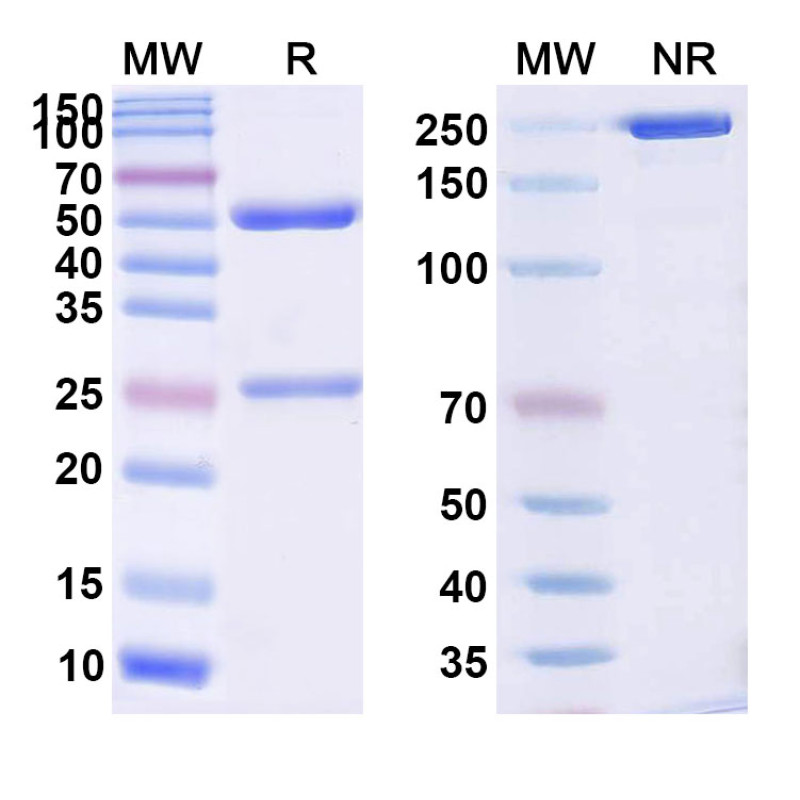
Purity: >95% as determined by SDS-PAGE.
Clonality: Monoclonal
Applications: Research Grade Biosimilar
Target: Dystrophin-associatedglycoprotein1,DAG1,Alpha-DG,Dystroglycan,Beta-DG
Purification: Protein A/G purified from cell culture supernatant.
Endotoxin level: <1EU/mg, determined by LAL gel clotting assay
Expression system: Mammalian Cells
Stability and Storage: Use a manual defrost freezer and avoid repeated freeze-thaw cycles. Store at 4°C short term (1-2 weeks). Store at -20°C 12 months. Store at -80°C long term.
Alternative Names: DAG-6F4,DAG6F4,DAG6F4
Background: Dystroglycan 1 (DAG1) is a ~97 kDa protein. The dystroglycan complex is involved in a number of signaling events and processes including laminin deposition and extracellular matrix assembly, acetylcholine receptor clustering, sarcolemmal stability, cell survival, peripheral nerve myelination, nodal structure, cell migration, epithelial polarization, and epithelium branching morphogenesis. Required for the formation of photoreceptor ribbon synapses, and long-term maintenance of inhibitory synapses in cerebellar Purkinje cells. Also involved in the positive regulation of cartilage formation through agrin (AGRN) binding and up-regulation of SOX9, a transcription factor that plays a key role in chondrocytes differentiation.
References:
1. Eldridge, S. et al. (2016) Annals of the rheumatic diseases 75, 1228-35. PMID: 26290588
Note: For research use only. Not suitable for clinical or therapeutic use.
Highlights:
• Research Grade — For PK/PD studies, assay development, and ADA research.
• Native Glycosylation — Mammalian expression ensures native-like patterns.
Host species: Human
Isotype: IgG
Species reactivity: Human
Immunogen:
Form: Liquid
Storage instructions:
Storage buffer: 0.01M PBS, pH7.4.
Concentration: 1mg/ml
Purity: >95% as determined by SDS-PAGE.
Clonality: Monoclonal
Applications: Research Grade Biosimilar
Target: Dystrophin-associatedglycoprotein1,DAG1,Alpha-DG,Dystroglycan,Beta-DG
Purification: Protein A/G purified from cell culture supernatant.
Endotoxin level: <1EU/mg, determined by LAL gel clotting assay
Expression system: Mammalian Cells
Stability and Storage: Use a manual defrost freezer and avoid repeated freeze-thaw cycles. Store at 4°C short term (1-2 weeks). Store at -20°C 12 months. Store at -80°C long term.
Alternative Names: DAG-6F4,DAG6F4,DAG6F4
Background: Dystroglycan 1 (DAG1) is a ~97 kDa protein. The dystroglycan complex is involved in a number of signaling events and processes including laminin deposition and extracellular matrix assembly, acetylcholine receptor clustering, sarcolemmal stability, cell survival, peripheral nerve myelination, nodal structure, cell migration, epithelial polarization, and epithelium branching morphogenesis. Required for the formation of photoreceptor ribbon synapses, and long-term maintenance of inhibitory synapses in cerebellar Purkinje cells. Also involved in the positive regulation of cartilage formation through agrin (AGRN) binding and up-regulation of SOX9, a transcription factor that plays a key role in chondrocytes differentiation.
References:
1. Eldridge, S. et al. (2016) Annals of the rheumatic diseases 75, 1228-35. PMID: 26290588
Note: For research use only. Not suitable for clinical or therapeutic use.
Images
-
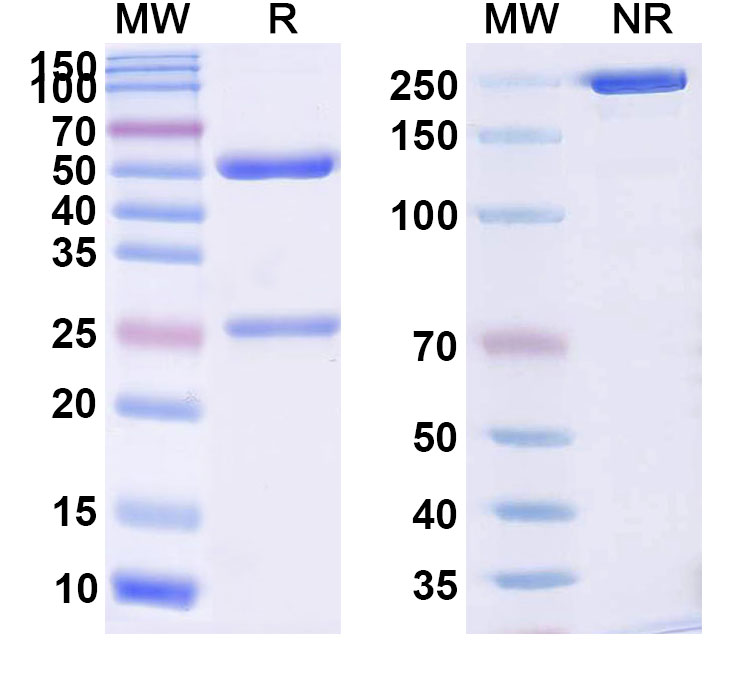 SDS-PAGE
SDS-PAGE for Research Grade Anti-Human DAG1/Dystroglycan (DAG-6F4)